

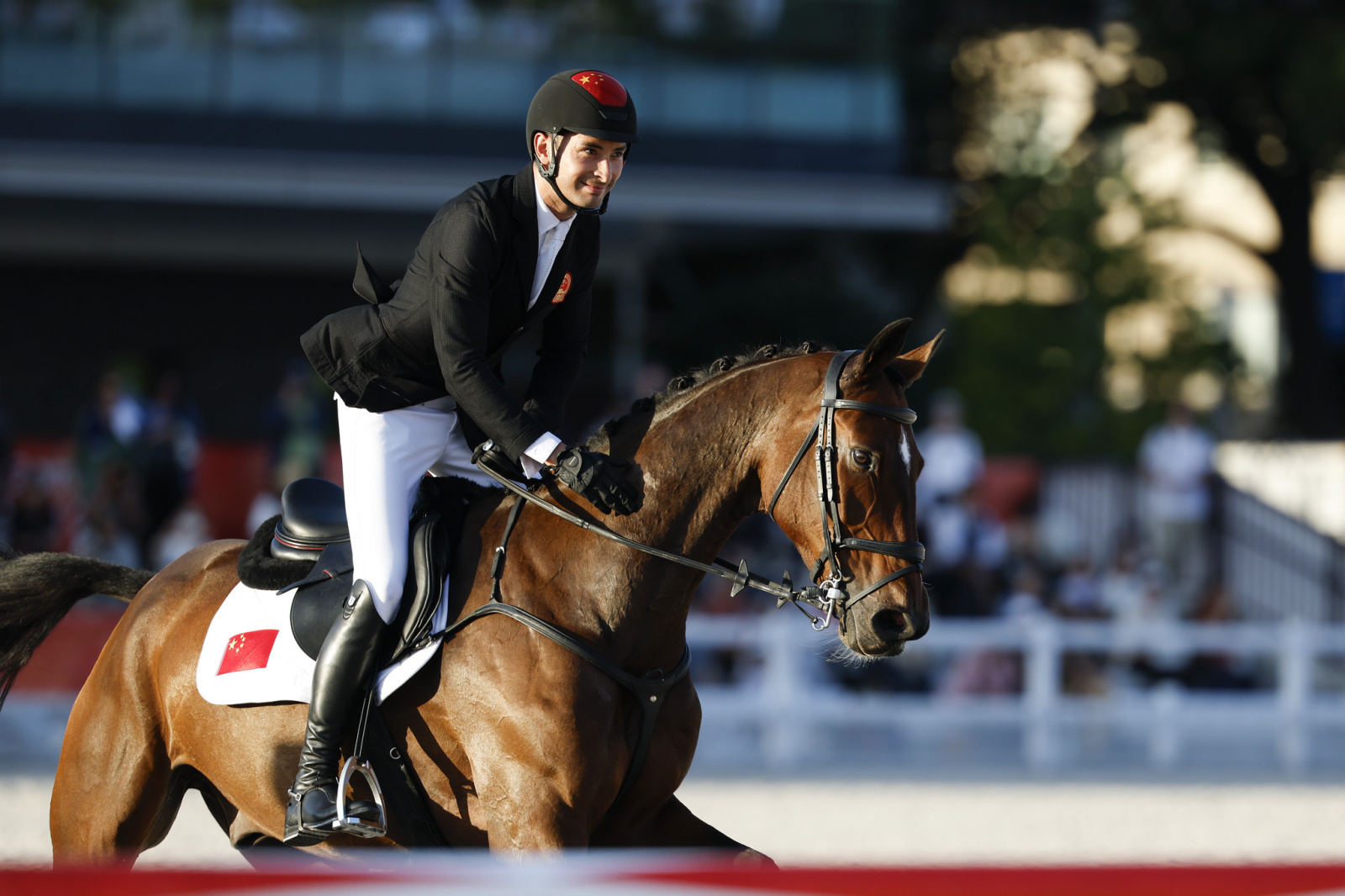

Defending individual Asian Games champion Alex Hua Tian made a strong start to his title defense as eventing got under way at the 20th Asian Games Aichi-Nagoya 2026 on Tuesday. Typhoon Dujuan, which has dumped record-breaking rain on some parts of the country, delayed the initially planned start of the equestrian competition on September 21. The adjusted schedule shifted show jumping to be the second phase to allow additional time for Marcin Konarski’s cross country course to dry; cross country will now take place on Wednesday, September 23.
Alex Hua Tian and Manjushri lead after dressage and show jumping on 26.9 penalties, giving them a 2.8-penalty advantage over Thailand’s Korntawat Samran and Billy Elmy on 29.7. Japanese Olympian Toshiyuki Tanaka and Talma D’Allou were third after the first phase on 29.9.
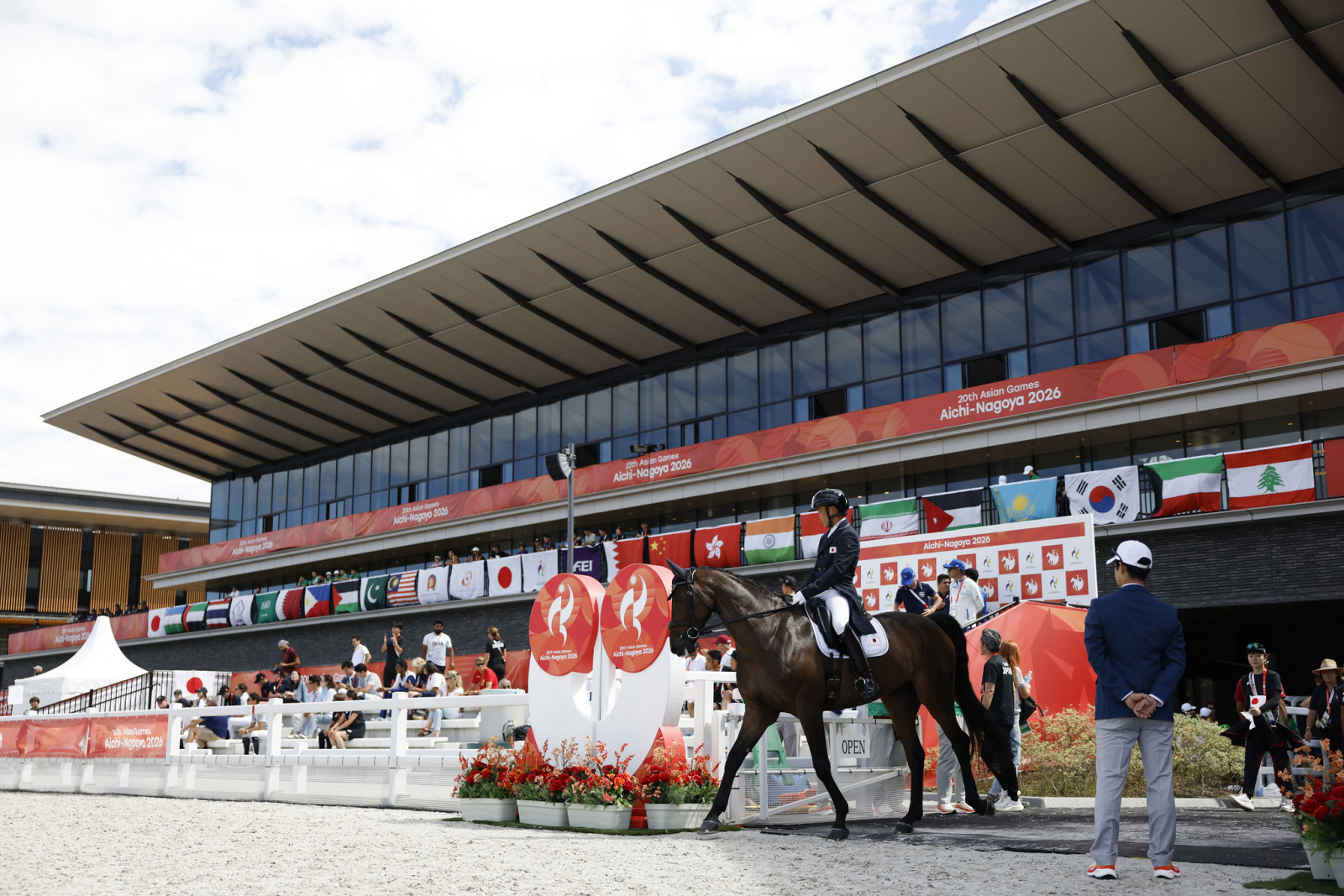
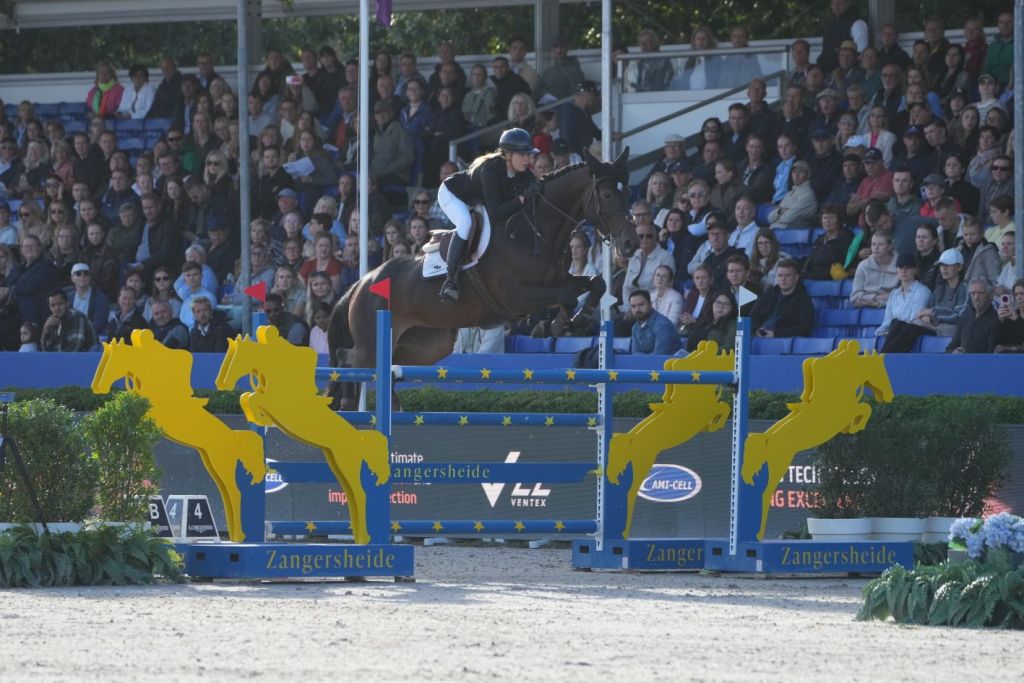
A familiar face: Kazuma Tomoto competes for Japan aboard Fer de Lance. Photo via FEI/Yusuke Nakanishi Photography.
“I’ve brought a very competitive horse,” said Hua Tian. Manjushri, Hua Tian’s ride in Tokyo, finished fourth at the FEI Asian Championships in Pattaya (THA) last year and, most recently, won the CCI3*-S at Alnwick in July on his dressage score. “He’s only nine years old, but he’s already competing at four-star level and he’s always been very reliable. I’m here to win an individual medal. Whether it’s gold, silver or bronze depends on what happens, but I hope we do a good job.”
Hua Tian would go on to maintain his lead following show jumping, adding no penalties to his mark. The 1.20-metre jumping course, featuring 11 obstacles and 14 efforts, proved influential, with only eight of the 32 combinations completing without adding any penalties. “The technical bits are out of the way now, and I’ve got to focus on the cross-country tomorrow and do a good job,” he said after his round. “I think the time is going to be influential. The ground looks much better than I thought it would after yesterday. The team here did an amazing job to prepare the course and mitigate the effects as much as possible.”
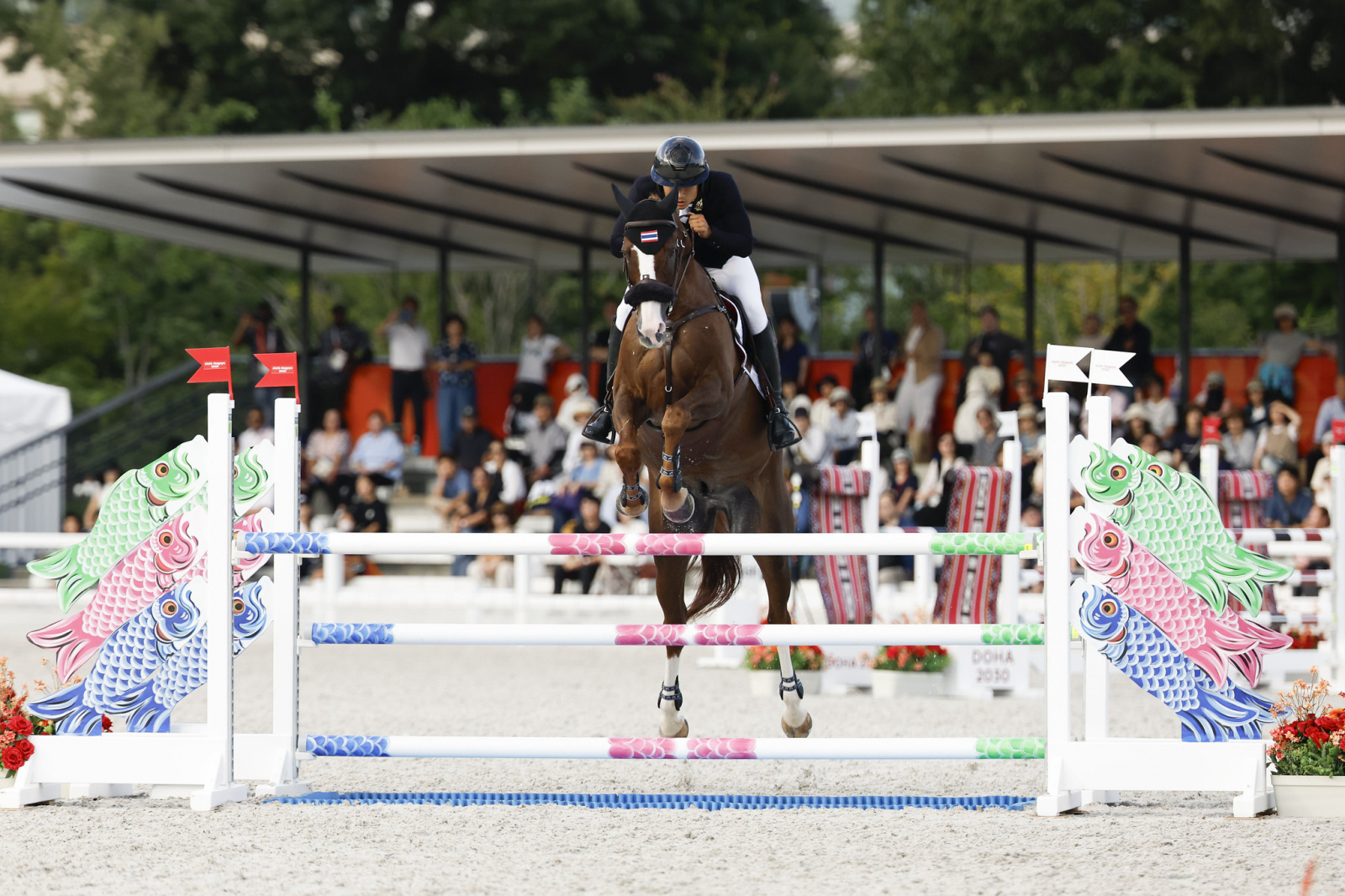
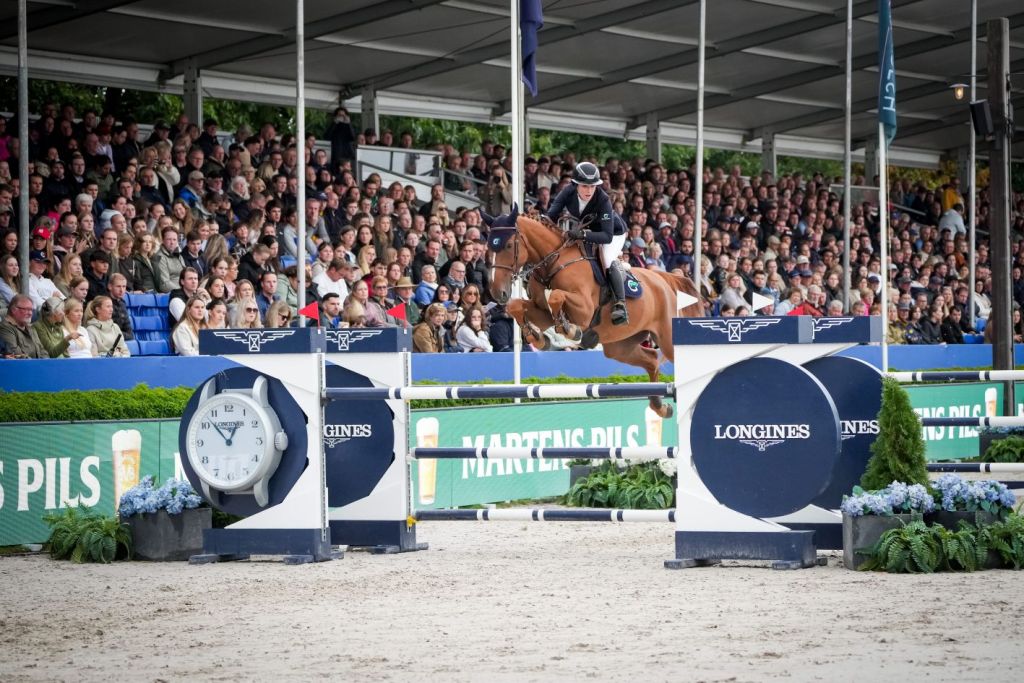
Woraphat Sittiju and B. Grimm Uster de Chaney jump from fourth into second individually for Thailand. Photo via FEI/Yusuke Nakanishi Photography.
Behind them, Thailand’s Woraphat Sittiju, with Uster de Chanay, moved from fourth to second after a clear round kept them on 30.1, while Japan’s Ryo Murata and Brookpark Vikenti also added nothing to climb two places to third on 30.4. Yoshiaki Oiwa, with Ottawa des Desig, completed a clear round as well, moving from seventh to fourth on 31.3 and giving the host nation two combinations inside the top four.
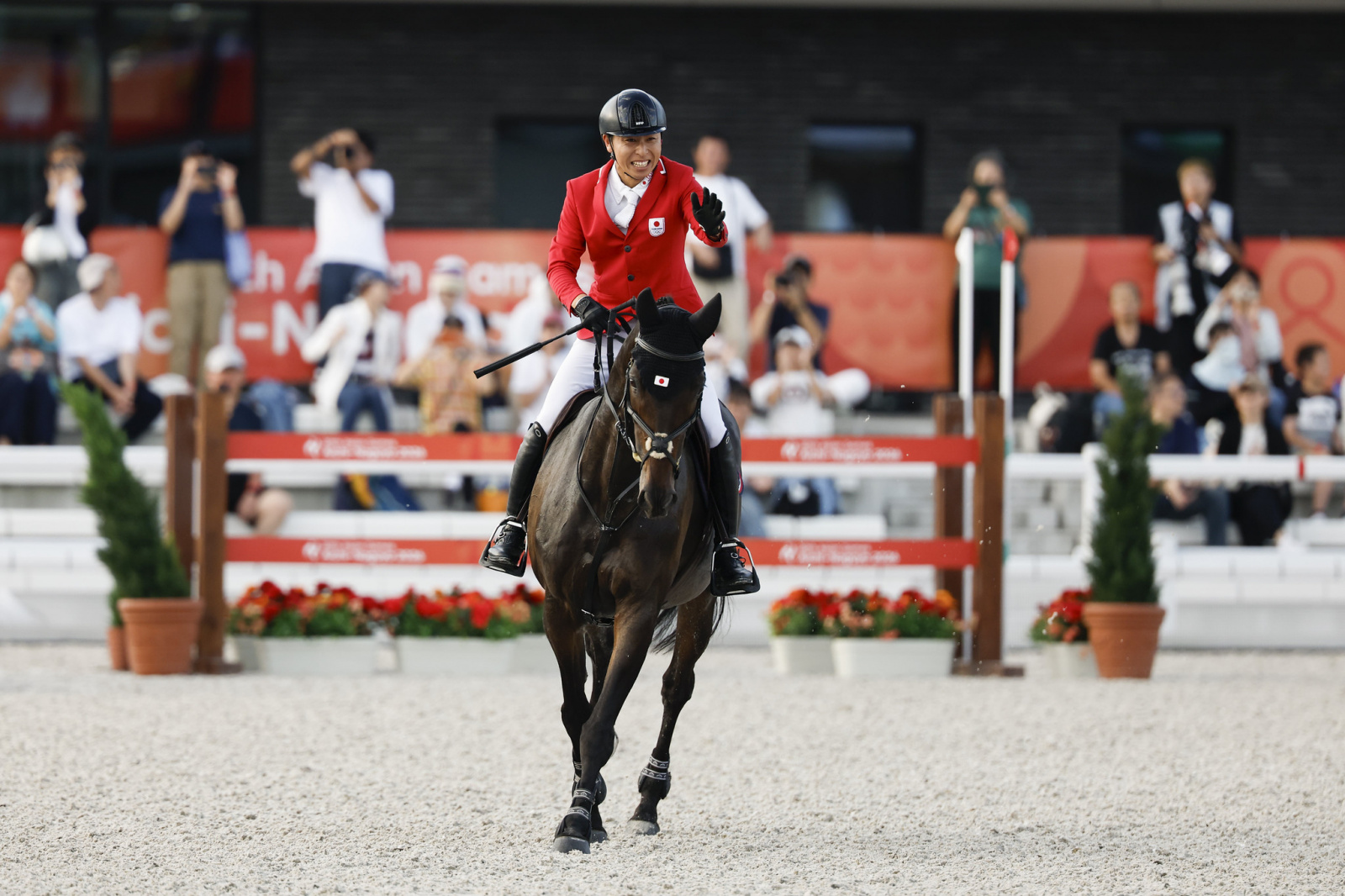
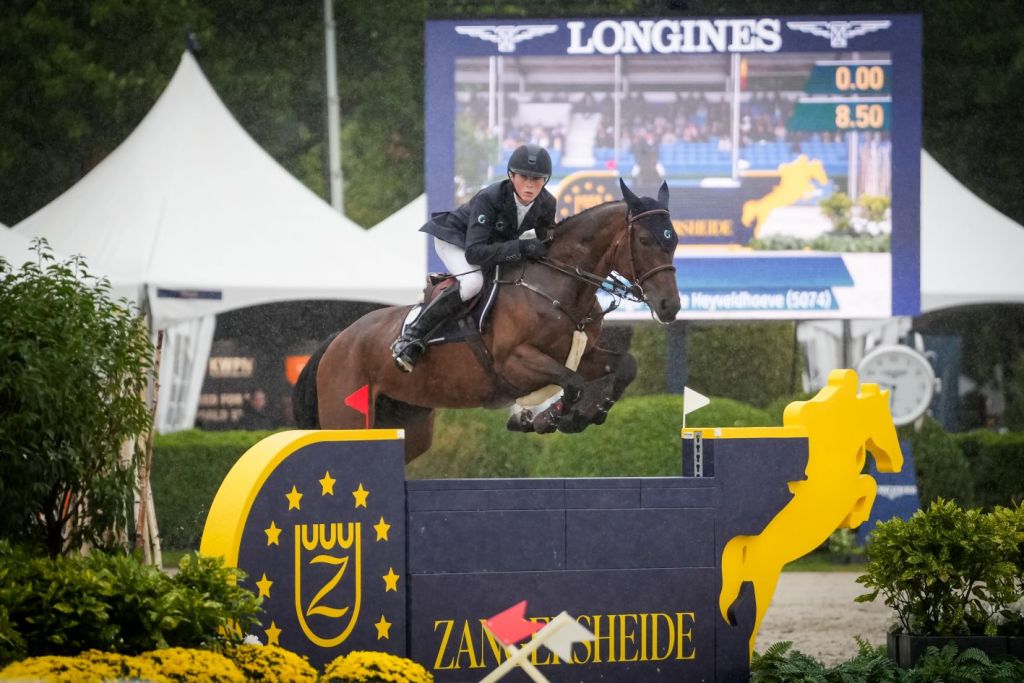
Ryo Murata and Brookpark Vikenti climbed into third individually for the host nation. Photo via FEI/Yusuke Nakanishi Photograph.
The jumping phase proved costly for several of the combinations that had been closest to Hua Tian after dressage. Thailand’s Korntawat Samran and Billy Elmy dropped from second to 13th after adding 9.6 penalties, while Japan’s Toshiyuki Tanaka, with Talma D’Allou, slipped from third to 19th with 12.4 penalties. Japan nevertheless extended its advantage in the team competition. The hosts lead on 97.3 penalties, 12.1 ahead of Hong Kong, China on 109.4, with Thailand just 0.5 further back on 109.9. China, the defending Asian Games Team champions, have no discard score after starting the competition with only three combinations.
“The fact that we’re in the lead after the first day is exactly as planned, although the actual results were a little different from what we predicted,” said Japanese Chef d’Equipe Atsushi Negishi. “We had hoped everyone would score over 70% in the dressage, but we started with more penalty points than expected. But after the dressage and jumping, we’re in first place with a 12-point lead. I believe we’ve gained a significant advantage.”
India’s team challenge ended when Arjan Singh Nagra and Cooley Goodwood were eliminated in jumping. With only three combinations entered, India had no discard score, although their remaining athletes continue in the individual competition.
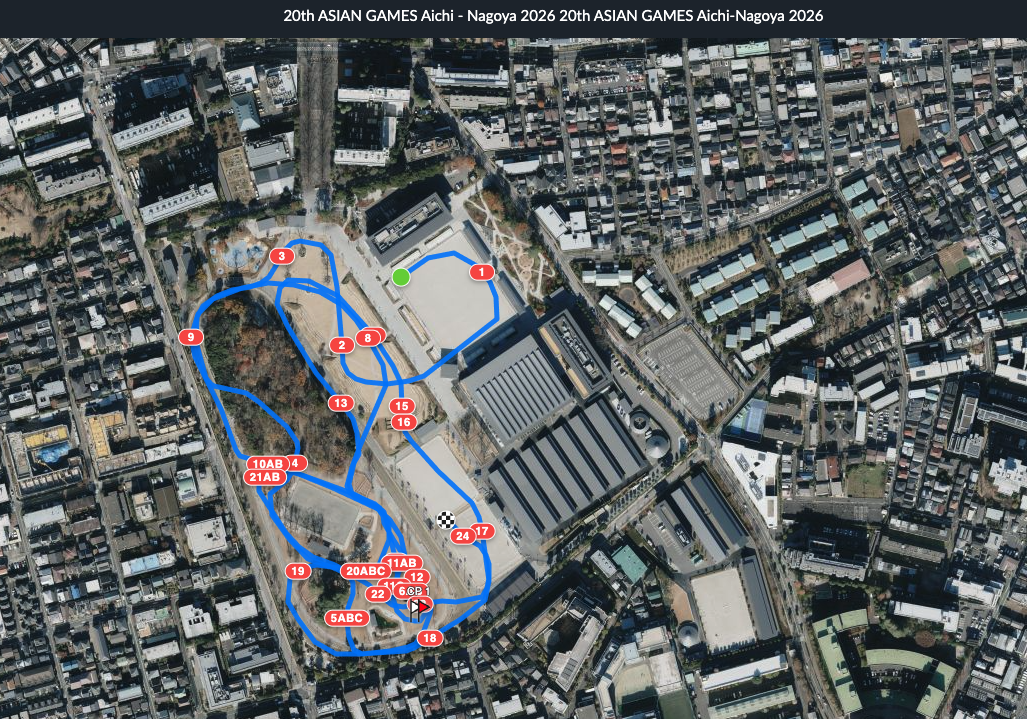
A satellite view of Marcin Konarski’s cross country course for the 2026 Asian Games. Cross country is run at the CCI2* level for these Games.
The 3,640-metre course designed by Poland’s Marcin Konarski features 24 obstacles and 30 jumping efforts, with an optimum time of seven minutes.
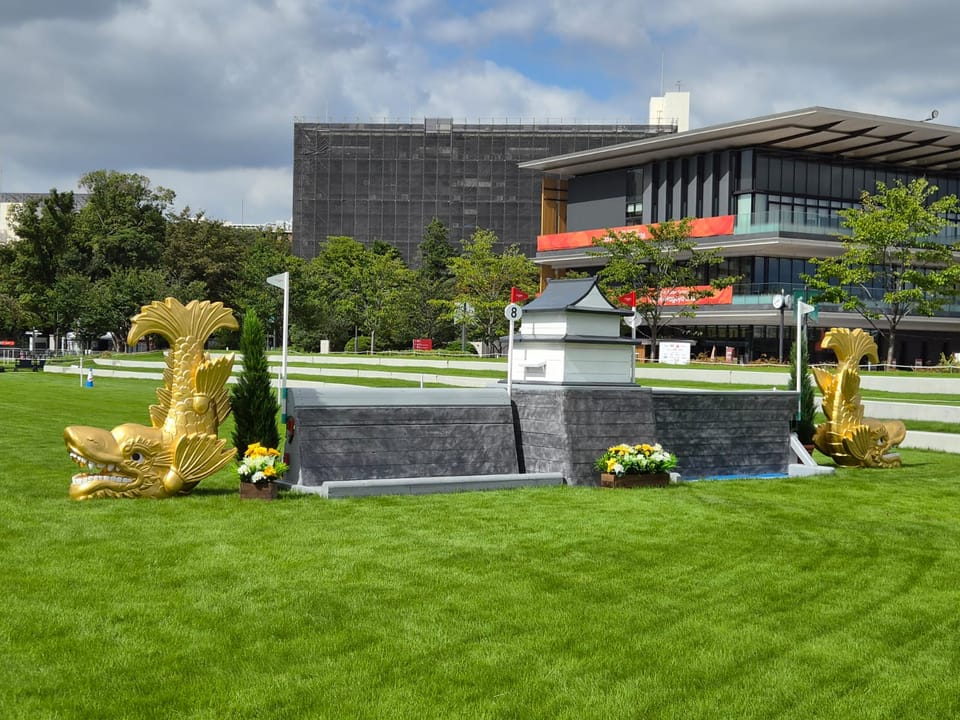
The cross country course backs up to the local metropolitan area, but lush, well-maintained grass features prominently on this unique track. Photo via CrossCountry App.
[View the course on CrossCountry App]
“I think Marcin has done an excellent and very interesting job. The time and technicality are going to be influential, and I think the ground could be very influential,” Alex Hua Tian described. “All of those things coming together will put a lot of pressure on the athletes, especially the ones who want to win. I think it’s an open competition and it will be interesting and exciting all the way to the end.”