

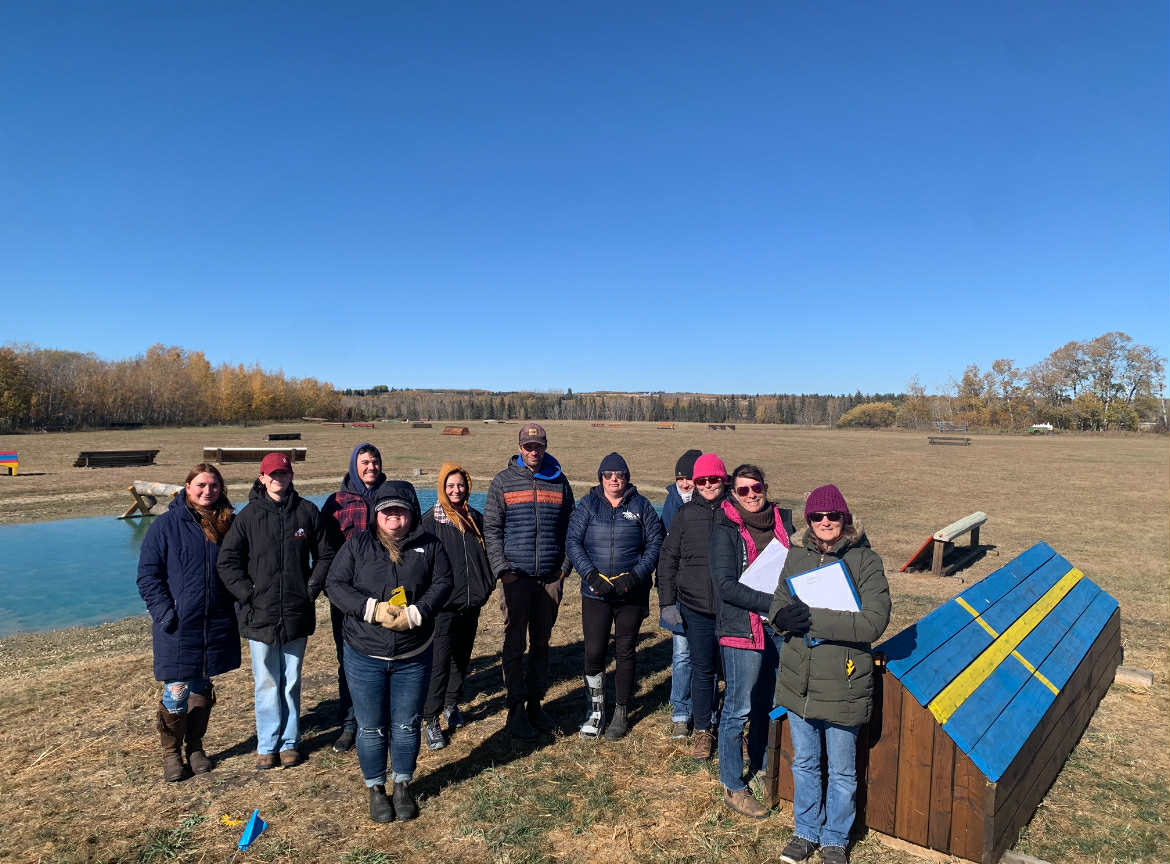
Clinic participants with instructor Dylan Berry. Photos by Jennifer Smart.
During October, Alhambra Stables in Red Deer, Alberta hosted the Equestrian Canada Eventing Course Design Clinic, led by Dylan Barry, an Equestrian Canada Level 2 Course Designer and FEI Frangible Advisor. Dylan brought a wealth of experience from designing at top venues including the 2019 Pan American Games, The Grand-Prix Eventing Showcase in Aiken, and The Fork at Tryon International Equestrian Centre.
The clinic serves as a prerequisite for promotion and maintenance within Equestrian Canada’s Eventing Course Designer and Technical Delegate programs, but it also welcomed coaches and riders looking to expand their understanding of cross-country design. Participants traveled from British Columbia, Alberta, Manitoba, and Ontario, many with aspirations to develop courses at the grassroots level and foster the sport in underserved regions. Youth members of the AHTA High Performance and Development Teams were invited to attend as auditors, gaining valuable insight into the design and safety considerations behind the courses they ride. For coaches, the clinic provided a meaningful opportunity for professional development as the sport continues to evolve toward a safer, more sustainable future.

Day One focused on the fundamentals of course design. A pre-clinic written assignment was sent out the week prior which ensured everyone was up to speed on design specifications and appropriate measurements for each level. Dylan guided participants through the core principles of effective design—balancing technicality with flow, ensuring visual clarity, and promoting fairness across divisions. A key concept was to even the steps from the entry point of competition to the international level, so that horses and riders were appropriately prepared for what was expected of their current level as well as introducing concepts required for following ones.
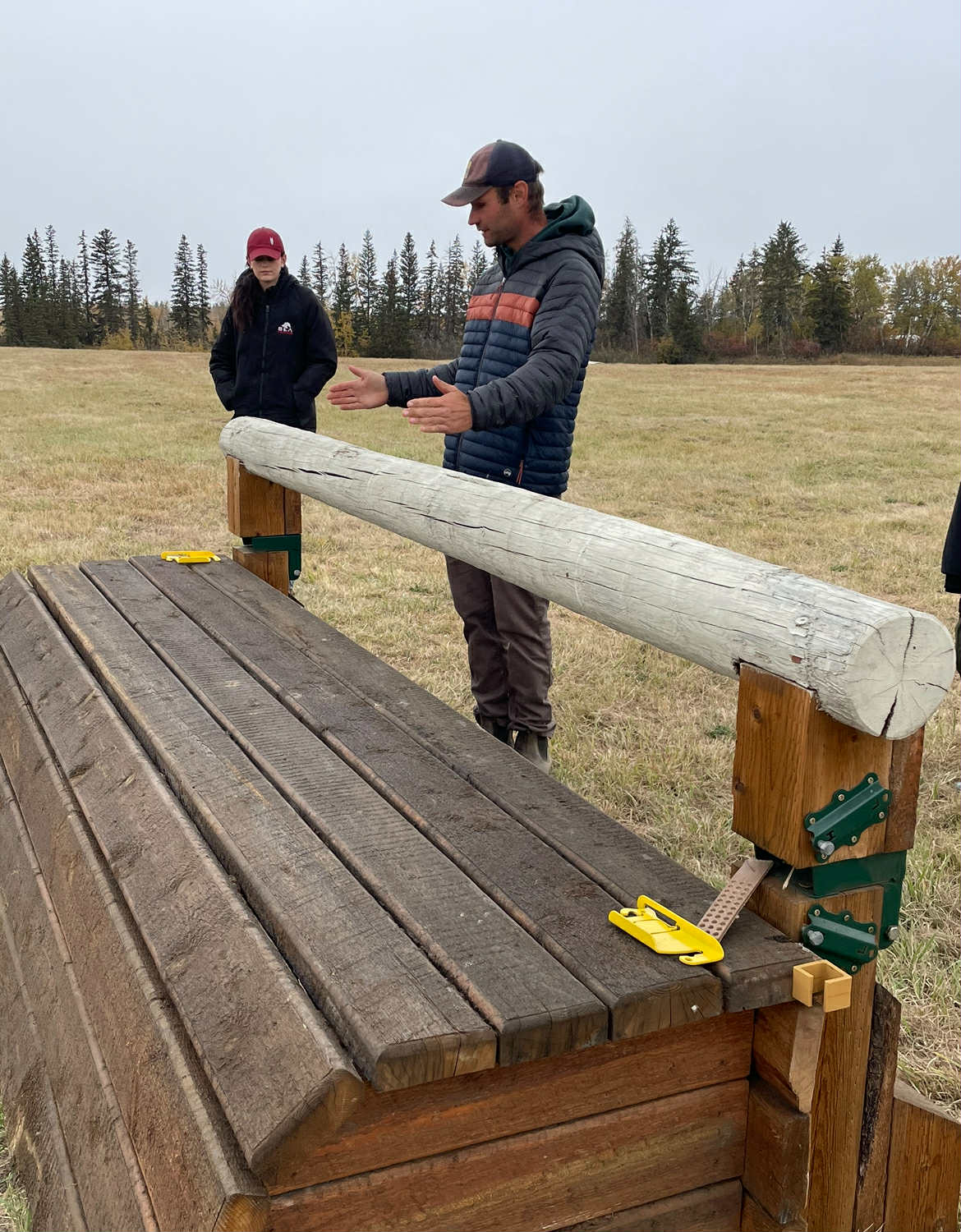
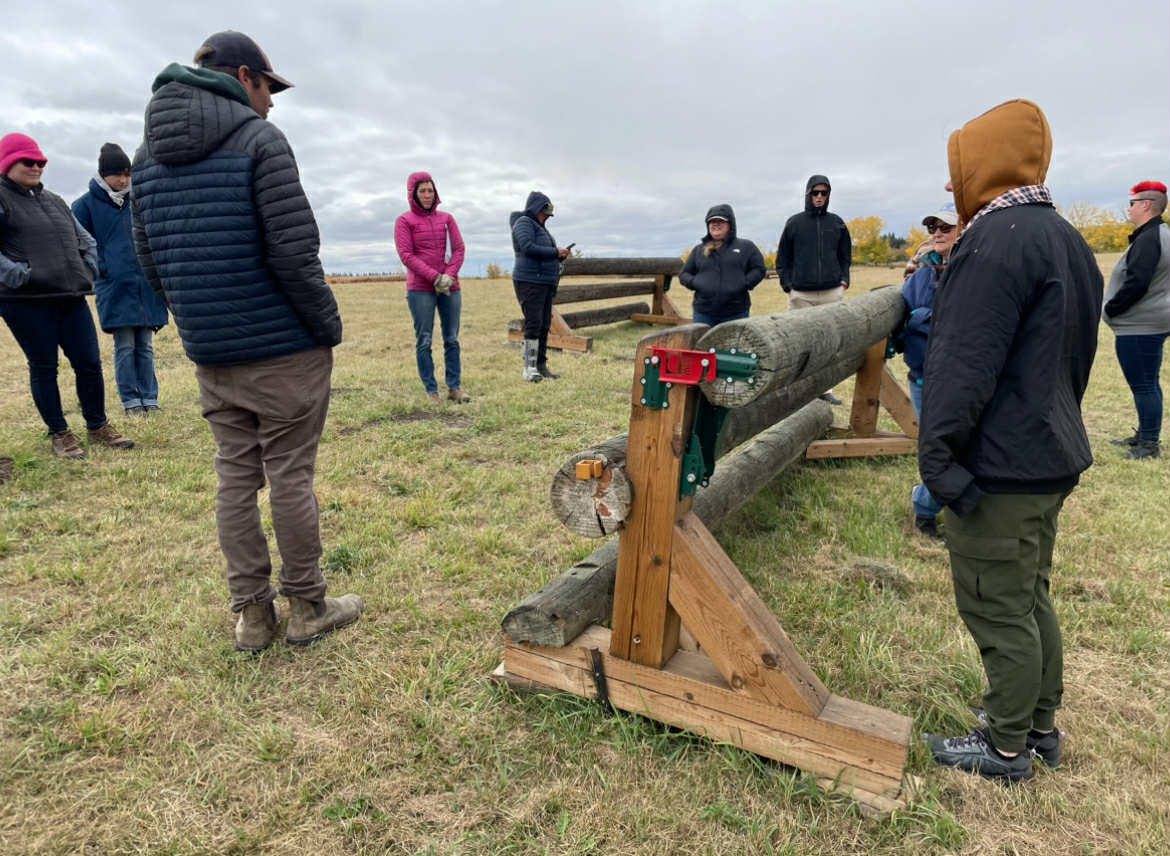
Safety was a central theme throughout the weekend. Discussion centered around frangible devices, ground lines, and terrain, with Dylan highlighting how thoughtful design choices can prevent incidents before they happen. Alhambra’s cross-country course, equipped with several fences fitted with MIM clips, offered a practical look at how different types of frangible kits function and how placement, approach, and fence type influence their effectiveness. Participants explored how fence design and location—particularly on terrain or within a combination—affect both safety and educational value.
Day Two built on these lessons with further discussion on frangible technology, ground lines, and fence profiles before participants were divided into small groups for a hands-on design exercise. Each group was tasked with creating a combination for the EV100 and EV110 levels, using Alhambra’s existing terrain and permanent features such as water jumps and banks. The exercise challenged participants to think critically about line, track, and suitability for level, revealing the intricate thought process behind every question on course. Each group presented its design for open discussion, engaging conversation about how subtle variations in fence shape, terrain or approach can dramatically alter a combination’s rideability and suitability.
As the clinic concluded, participants left with a deeper understanding of what goes into building courses that are safe, fair, and progressive, as well as a renewed appreciation for the collaboration between course designer, coach, and competitor. The weekend underscored that exceptional cross-country courses don’t merely test skill—they develop it, fostering confidence and growth in both horse and rider and aiding in the progression of Long Term Athlete Development.
Funding and support for the clinic was generously provided by the Alberta Horse Trials Association, Alberta Equestrian Federation, and Alhambra Stables who graciously sponsored the use of their venue. This assistance allowed the course to be offered at a reduced rate and so made it more attainable to a greater range of participants. To make the weekend even more enjoyable, Erna Marburg, a familiar face in the Alberta eventing community, served delicious homemade breakfast and lunch each day. It was particularly appreciated having a hot meal between sessions to warm up from the chilly weather of the weekend. It also allowed attendees to stay onsite and be able to continue to exchange thoughts and ideas with each other. With this support, the Equestrian Canada Course Design Clinic at Alhambra Stables was able to help shape the next generation of eventing professionals—ensuring that safety, education, and progression remain at the heart of event course design.
To learn more about eventing in Alberta and stay in the loop of other clinics, shows and more, click here.