In the wake of the Andrew McConnon horse abuse case decision and other issues facing our sport, the EN team has penned some opinion pieces to share with our readers. You can read our full breakdown of the McConnon case here. You can read Amanda Chance’s piece here and Cheg Darlington’s here.
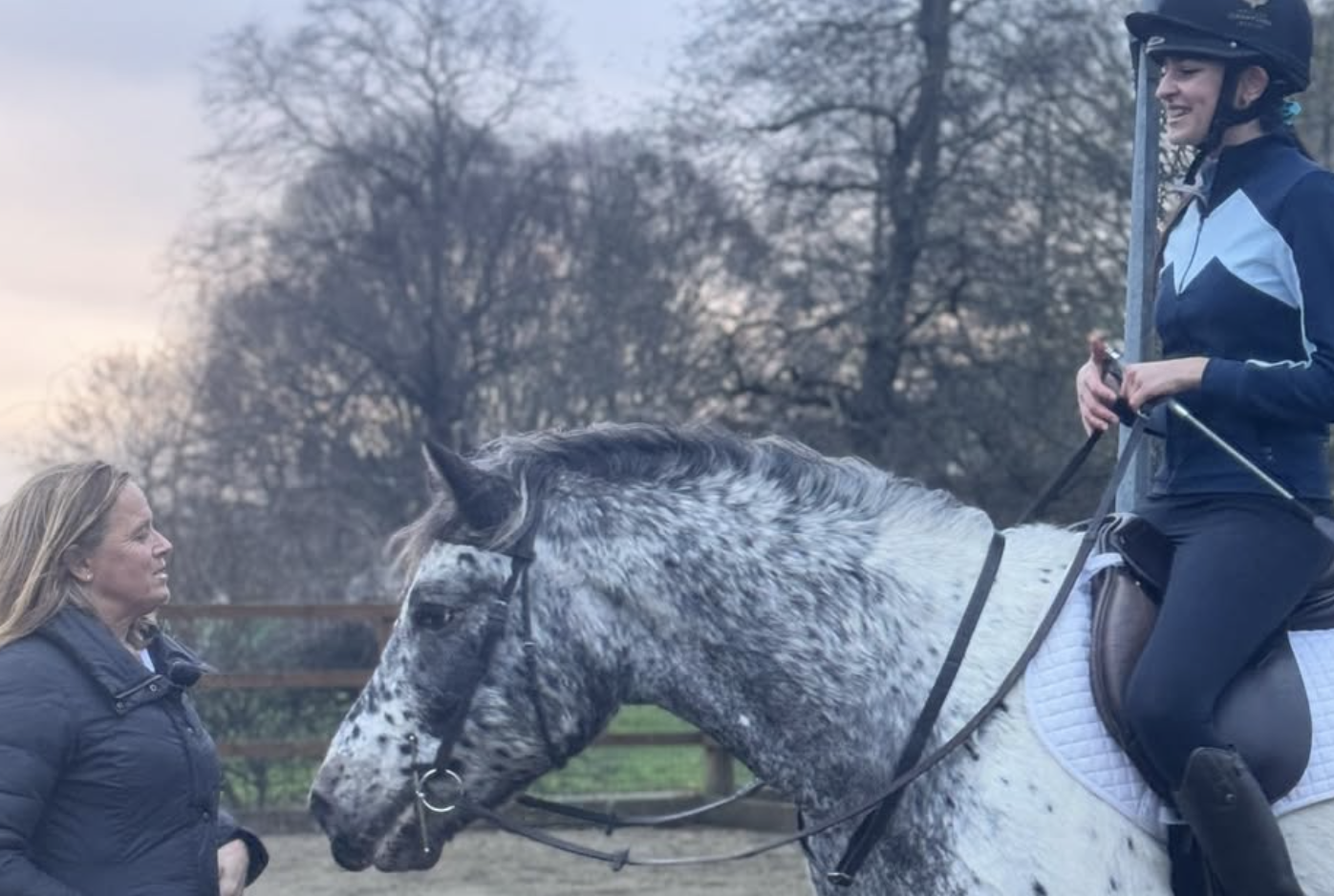
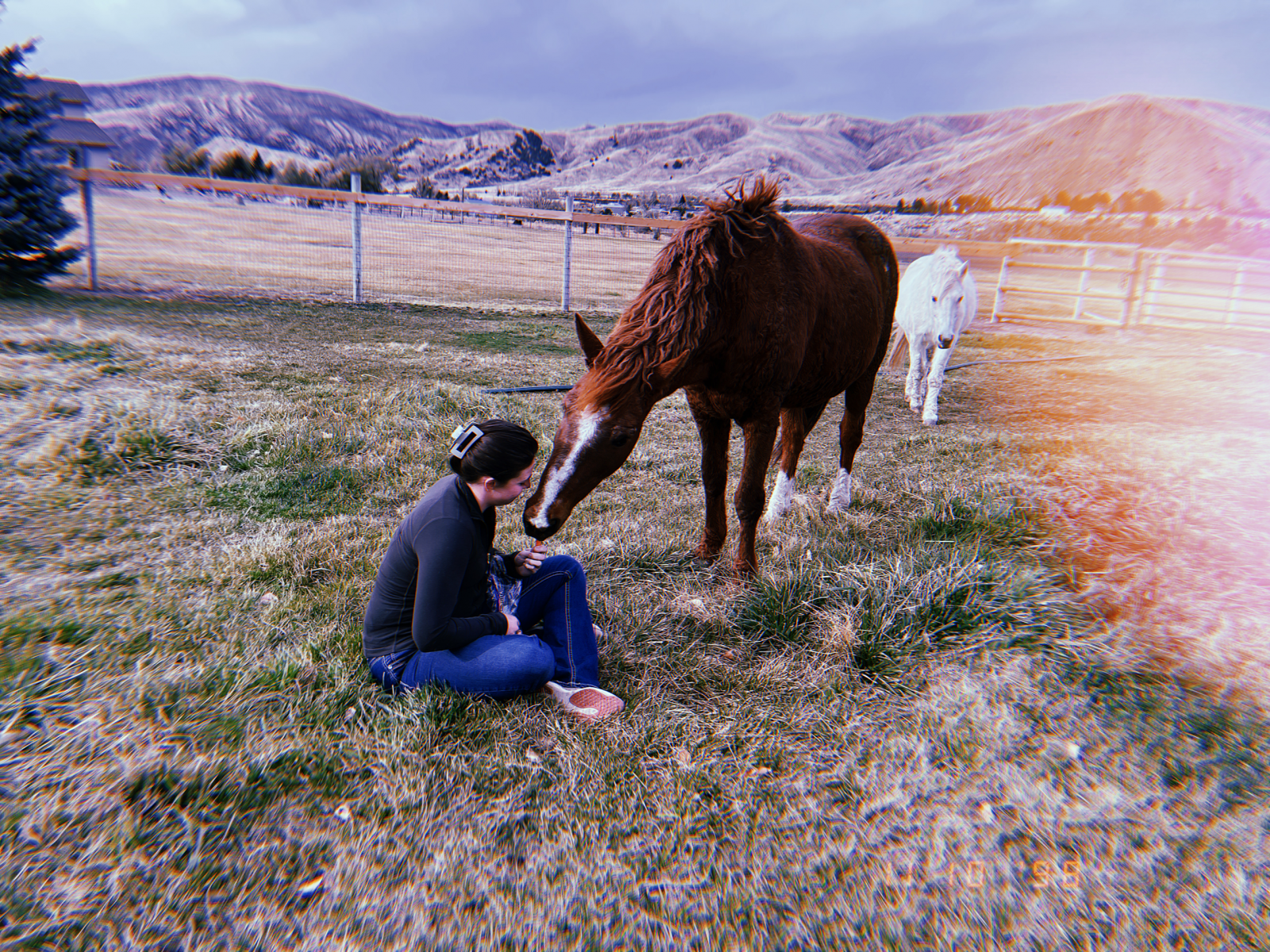
My heart horse Prince, who I’ve had since he was four years old and is now enjoying the pasture retirement I promised him as a young, horse-crazy kid. Everything I do, I do because he taught me what it means to be an empathetic listener and a trusted partner to the voiceless.
Like many industries in recent years, equestrian sport is experiencing its own reckoning with long-overdue accountability. Sports worldwide have faced similar cultural shifts where silence is no longer the default response to abuse. Every one of us is grappling with questions about power structures, transparency, safeguarding, whistleblowing, and at the head of it all, the question everyone is asking that we haven’t yet found an answer for: how do we advocate for the horses, who can’t advocate for themselves, without destroying our sport?
To be quite frank, our team is tired. We are sick. We are disheartened, and we feel this all very deeply. Working in equestrian media and interacting with these upper-level riders on such a close and consistent basis, devoting our careers to their careers, and working tirelessly to make sure they get all the attention and recognition they deserve forces us to confront many uncomfortable truths about people we’ve championed when their character is questioned. If we can no longer trust the athletes we pin to our walls and save in our photo albums, how can we advocate for the horses and the victims? How can we trust in a broken system?
In an honest and transparent attempt to address all perspectives in the “argument”, I’d like to frame my opinion in response to those of different views than my own.
- “Putting every upper-level rider under a microscope is going to destroy the sport just as much as the abuse is.”
- “This is a physical sport and anything can be framed as abuse – every single horse person I know could be accused of abuse if a frame was taken out of context, so let’s make sure we’re making well-founded accusations before jumping to execute.”
- “You can’t make a sport with no abuse… that is not exclusive to eventing or even sport in general.”
I’ve personally met and worked with several upper-level riders that I can say with utter certainty would never allow, perpetuate, or condone any level of abuse, mistreatment, or even anger aimed at a horse under their care. However, I fear that this mindset and moral straightness may be only a drop in the ocean of an industry whose scale and cultural pressure often drowns out its best examples. Some of these athletes have been struggling for years to find staff that follow and support their ideals, make it work without cutting corners in welfare, or return to the 5* level without doing wrong by their horses, and that’s the kind of mindset I can wholly respect.
These are the kind of riders who have no reason to force NDAs on their staff and students, who aren’t enacting “no video on property” policies, and whose names aren’t whispered throughout the professional groom and rider circuits. While these policies are not inherently signs of wrongdoing, they can create environments where oversight is limited and abuse becomes harder to detect. Just because there’s a pattern does not make it okay. Just because we’ve all seen it doesn’t mean it’s an infestation that can’t be cleansed. This mindset is inherently negative and untrusting of the kind of people we want to see more in the sport – the ones who will make a difference when we finally step back and decide it’s time to stop perpetuating and enabling wrongdoing.
And yes, I’ve also seen the many contrarian comments of “let he who is without sin cast the first stone” rhetoric. I remind all that the Horse is without sin – and while fairness matters for everyone involved, our moral obligation is weighted toward the being who cannot speak for themselves. If we cannot find a wholly blameless athlete in this ocean of noise, then the acceptance of responsibility and the constant pursuit of a vulnerable trust in their equine athlete is what we hope will serve to guide a rider to that place of respect and integrity we are so desperately searching for.
- “We can’t keep cancelling people online. We need to think about how all this affects the people being attacked and how we would feel in that position; the fact that we all as humans are not perfect.”
- “If you call someone out and say, ‘yeah, let’s be better’ and get slaughtered yourself in response, nobody is going to speak up.”
- “Ruining someone’s life publicly is not the way to bring change. There’s no way to know what happened in these scenarios out of context, and jumping the gun by blasting them on social media is how the sport will end.”
Think on where we’ve come as a sport since SafeSport was enacted — from the generation of George Morris and minor abuse and a culture of “this is just what happens” to our current system of spending what may seem like a slog of hours spent by every U.S. member of the sport every spring reminding us, “hey, here’s what abuse looks like within a power dynamic” and “here’s some actions you should be aware of that people may try to get away with”. It took several high-profile equestrian abuse cases, as well as the interference of federal law and a requirement that exclusive jurisdiction be relinquished to a third-party system, to make those steps. SafeSport was created to address multiple historical injustices, but most notably power imbalances, institutional silence, lack of independent reporting pathways, and serious misconduct that, historically, was being ignored.
The difference between who we were as a sport then is that we now know exactly where to go and who to tell if there’s a concern for human abuse within the industry. Will we ever be able to eradicate the internal struggle of “what if it’s nothing and I ruin their lives over this” or “what if they find out I reported them and I’m the one who loses everything”? I honestly don’t know — but we’ve done all we could, advocated for the voiceless, and trusted the system, albeit broken as it may currently be. We made a record and pledged our voice — and yes, maybe nothing comes out of your personal report. But if the accusations pile up and a case is made, you’ll have contributed, you’ll have done your part, and action can be forced. At the very lowest level, this must be something we feel safe to do — whether it be a youth student, a staff member, an onlooker at a clinic, a neighbor watching from a window, or someone close to the abuser.
When there is no system in place, people are inclined to take things into their own hands and resort to cancel culture. There is no hierarchy of reporting available that we can fully trust, and aside from taking to the keyboard on Facebook — despite it often proving to be the worst outcome for the horses, the people, and the sport — all other options seem futile to the helpless. There is little accountability and little direction. Our governing bodies are continuing to prove that inaction is to be expected, and have shown us no reason to trust that change is coming. The lack of true concern shown for the horses in the FEI tribunal case against Andrew McConnon was deafeningly loud, and therefore the trust that an average horse person can now hold in expecting swift and fair action against an abuser is depressingly low. And so, as stated by one user on Facebook, “[USEF’s] decades of inaction have forced people to find a platform where people actually will pay attention.”
While SafeSport obviously isn’t a perfect system, it has demonstrated something important: that an independent body can change a culture where abuse was once normalized or ignored. I believe we need an independent equine welfare oversight body — separate from the politics and governance of the USEF, FEI, and riders who hold position of influence, but serving to complement them with a system intended to prioritize the horse away from all conflicts of interest. Where SafeSport has provided a model of external oversight in recognizing power imbalances, creating reporting pathways, educating the common athlete, and enforcing consequences, we must build a parallel framework tailored specifically to the welfare of our equine partners.
Could expecting and requiring a third-party system to investigate and address reports and accusations of equine abuse be placing too much trust in a broken system? Maybe. But how else do we try to bring things to light concerning the ‘Untouchables’? How could I possibly believe that an abuse report will be addressed, when the only affiliation I know of to report abuse is the same organization on which the accused heads several committees? Who’s going to be trusted first – an 18-year-old groom, or an upper-level athlete who’s brought accolades and honor to our sport and our country?
Andrew McConnon’s case was handled by an official Tribunal of unbiased legal professionals. Investigation was performed, witnesses were called on both sides, evidence was submitted and analyzed, and a very long, very quiet trial was held. I fear, however, that we once again have been wronged by the power imbalance here — what groom or student or neighboring horseman would assume that they need to retain a lawyer to ensure they have proper documented evidence, credibility to their claims, and an air-tight corroboration between other witnesses’ testimonies? If going up against a panel of lawyers and officials who place weights on “comfortable satisfaction” of evidence and against past abuse case sanctions, the burden shifts away from prioritizing the wellbeing of the horse — the advocacy that should always remain at the forefront.
Additionally, think about where that hypothetical 18-year-old groom has gained their education up until this point. Working students beginning their career with a top rider they revere and idolize have no idea what’s right and what’s wrong, especially when their first experience at this level of sport was a 5* rider telling them “this is just how things are done”. We cannot rely on whistleblowers or expect them to obtain, protect, and submit evidence when they have no foundation on which to recognize abuse and report it safely, to the correct channels, and with enough proof to enable a justified and viable investigation. These two issues compound each other — the less a working student understands about what constitutes abuse, the less able they are to report it confidently or safely.
To be clear, this is not an argument for abandoning accountability or silencing concerns. The sport may not be becoming more inherently abusive — the light is just getting brighter and our communication is getting louder. Public exposure has become the default only because our formal reporting systems are inconsistent, slow, or inaccessible. We must replace reactive and chaotic online “justice” with a reliable, transparent, educational, and independent process. When a trustworthy system exists, it is my hope that riders, grooms, owners, and bystanders will no longer feel forced to turn to social media as their only option.
- “What exactly do you hope to accomplish by blasting people online rather than reporting it to USEF/FEI?”
- “Nothing good can come of posting videos like this, besides exposing our sport and lifestyle to cancellation from the public.”
On July 23, 2024, just weeks before the Paris Olympic Games, a video surfaced online of global champion and Olympic dressage rider Charlotte Dujardin arguably abusing a horse, and cancel culture took over quickly and devastatingly. The video was disturbing and difficult to watch, and in the span of a few days was spread across the globe on both equestrian and mainstream media. The difference here lies in Charlotte’s public response — a model for how accountability can look in practice. While still defending herself in saying that her actions were “completely out of character and does not reflect how I train my horses or coach my pupils”, as any top rider would, she admitted her wrongdoing, voiced her regret, apologized for her actions, and claimed responsibility in letting down her country, her supporters, and her fans. Charlotte voluntarily dismissed herself from the Olympic Games, cooperated fully with the governing bodies, served her suspension sentence, and is now back competing in the public light.
Granted, as we learned following this admission, FEI Tribunals will credit horse abusers for admission of guilt with a reduced sanction when deciding a sentence, similarly to a “guilty plea” in the U.S. criminal justice system. So while it was in her favor to come forward in this instance, especially while facing irrefutable evidence, I will grant her the respect deserved for the manner in which she ceded. (Let us also remember that Dujardin’s Tribunal Decision report was 8 pages in length; not quite comparable to McConnon’s of 120 pages). Do I still hold a level of trust or respect for Charlotte Dujardin the same as I would any other top rider? No. But because of the way she addressed her charges with grace, acceptance, admission, and cooperation, I hope to allow her the chance to once again prove herself to the industry and the sport, show us that she has changed, and work to reform herself in a positive light.
5* rider Tamie Smith’s (since edited) post on November 26th, “An Open Letter to the Equestrian Community and Governing Bodies”, was, respectfully, a very welcome and well-stated position on Andrew’s sentence — prior to her exposure to accusations regarding her own maltreatment — and made a great call for action in mandating counseling, education, supervision, and reform for those in similar positions as Andrew. Unfortunately, this moment also served as a reminder of how silent many riders at Tamie and Andrew’s level have remained. We’ve heard nothing of the horses’ owners, who were not even called to testify against Andrew in the proceedings of his litigation, we’ve seen no other public statements from his peers, and our requests to the USEF and FEI for updates or information have been met with dismissal.
However, in response to Tamie Smith’s public statement regarding her own accusations: Being the toughest of the best is not the mindset we should have. The number of people leaving eventing is quickly becoming catastrophic. People without the monetary support necessary to tread water don’t stand a chance, and getting your big break can seem hopeless for so many. So yes, the sport is hard. The lifestyle is hard. Having the drive and commitment necessary to make it to the top is HARD. This is not any excuse for condoning or even accepting abuse in any form. There is a difference between a “high-pressure, high-responsibility environment” and an abusive, toxic one — and this should not be our goal. Winning at any cost should not be our goal. A true champion is defined not by results or the prizes they chased, but by the trust and welfare of their horse. Our goal should be to pursue excellence through empathy, partnership, and uncompromising integrity — to seek to honor our horse, rather than to utilize them on our rise to the top.
To the students, the staff, the neighbors, the owners, the onlookers, and the worried: We are working on an upcoming release that will hopefully help outline what to look for, what crosses the line, how to appropriately capture viable and substantial proof, and most importantly, how to anonymously, safely, and correctly report when you’ve witnessed wrongdoing. Until we’ve found a new system, keep looking, keep educating yourself, keep evidence, and keep working to place yourself as a proponent of safety. Don’t be complicit, but protect yourself from being another weightless-vote witness in an FEI trial.
To the governing bodies: Get your sh*t together. The people doing everything right are being harmed by those who aren’t, and the horses have no one else. We cannot expect an abuser’s fate to wholly rely on a demand for perfect, uncircumstantial evidence from those in the most vulnerable of conditions. Do better. Do more. Do it right. And above all, do it for the horses.
To the riders: We must be apologetic, not defensive. Impossible and hopeless as it may seem, take accountability for your actions and show us you’ll do better. Don’t just tell us you’re here for your horse — prove that their trust is your priority every day going forward and show us that we have nothing to fear. Prove to us that you’re accepting and making changes. Without transparent systems, we have no way to confidently know whether someone with a history of abuse has straightened up and changed their mindset or if they’ve just gotten better at hiding it. If we want this sport – or any horse sport for that matter – to continue, we must prove that we are ethical in our treatment of horses and humans always, not just when the light is shone on your actions.