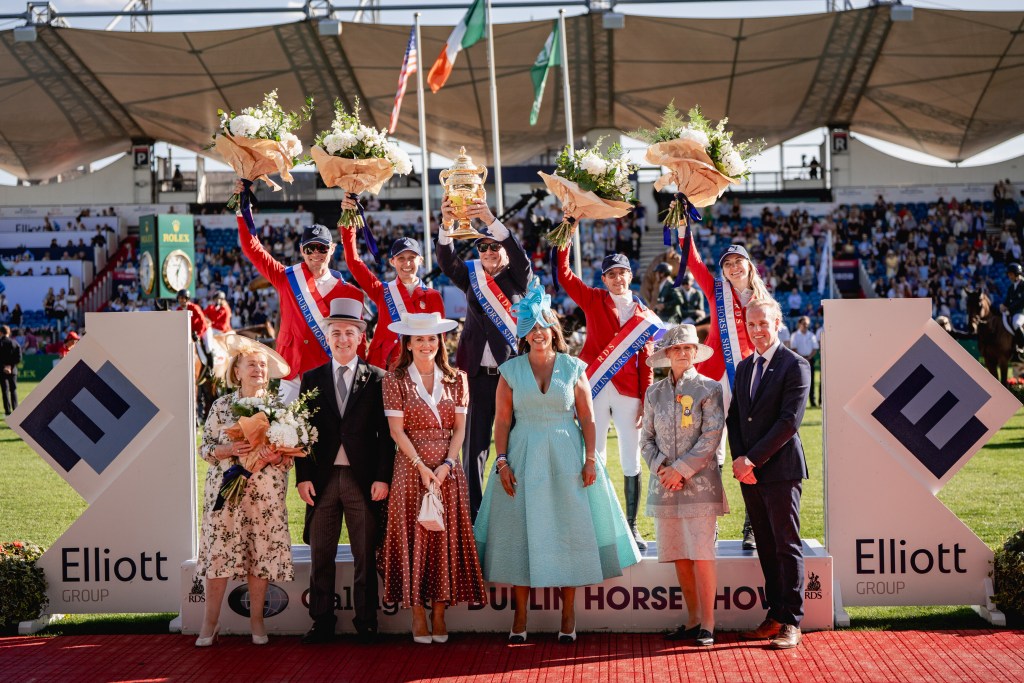


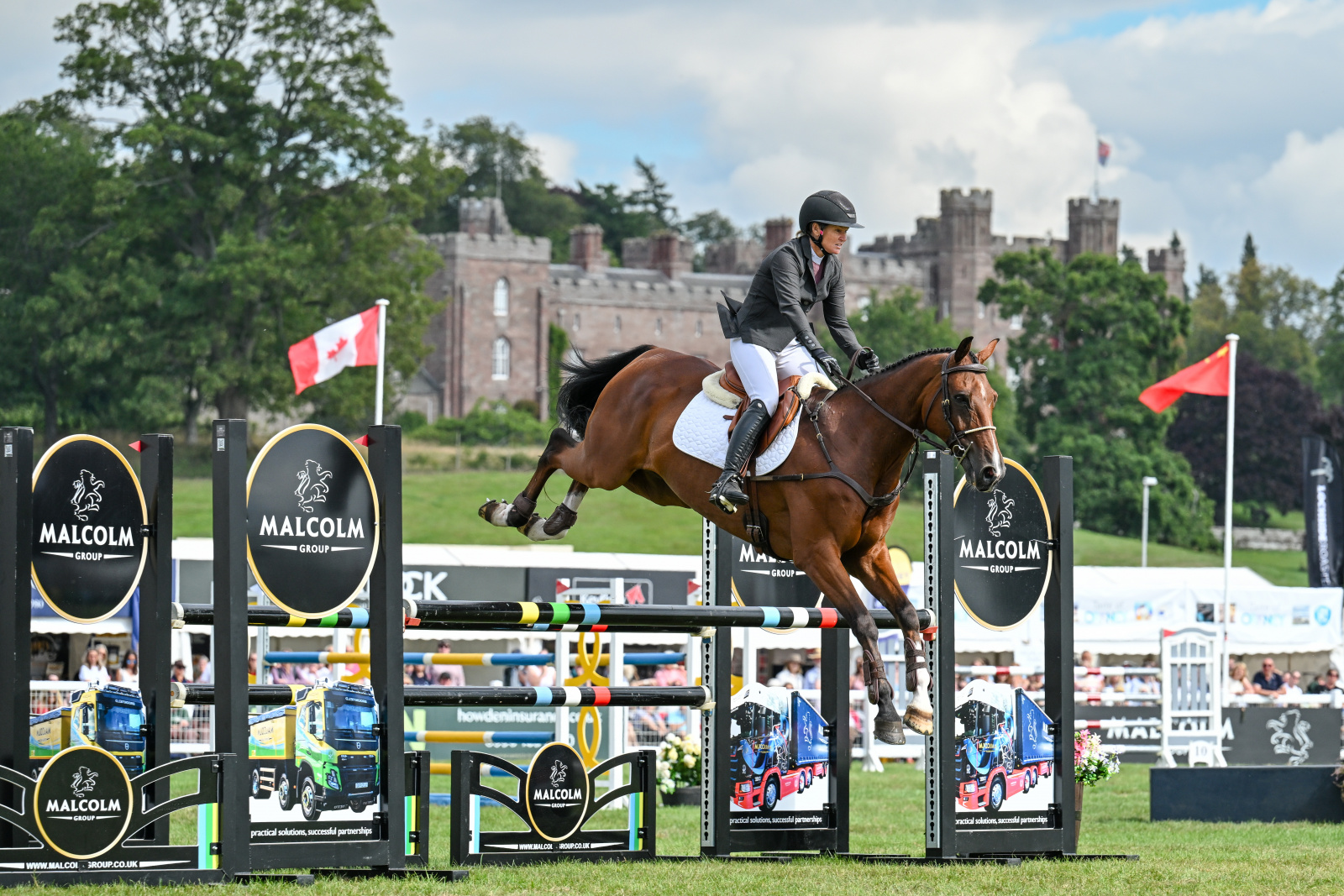

Jonelle Price and Capitaine de Hus Z take the inaugural Scone Palace International CCI4*-L title in 2025.

As the organizing team behind the inaugural Scone Palace International Horse Trials wrapped up the monstrous load of work that is putting on a three-day event in August of 2025, one emotion zipped among them: elation.
The stakes of unveiling any new competition are high; the financial investment required is astronomical, and the manpower required is that not just of sheer numbers, but also of expertise. Much, in particular, was riding on the 2025 debut of Scone Palace’s eventing offering.
To really understand the significance of this young event, one must look at the story of how it came to be.
In 2024, the final running of Blair Castle International – a storied Scottish event with origins dating back to the 1970s – was a roaring success. The sole international event in Scotland, Blair Castle had earned its place in the eventing history books.
But an ever-growing concern amidst the eventing community came calling. Land use and availability for a sport that requires massive acreage to function continues to influence the sport’s future. Despite the fact that Blair Castle was a perennial economic success, its host property, the Atholl Estates, announced a pivot to a heavier focus on regenerative agriculture. This decision necessitated a change in the management of the ground and thus, eventing saw the curtain close on Blair Castle.
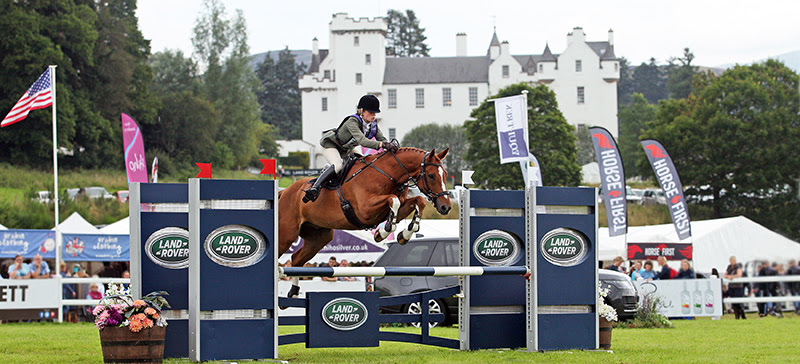
Photo by Julia Shearwood courtesy of Land Rover Blair Castle International Horse Trials.
Fortunately, others were watching.
While we often focus on the costs associated with organizing an event, it’s also key to focus on the economic impact a well-attended event has on the local economy. Economic impact is music to a government’s ears – and nearby in Perthshire, another entity saw an opportunity to give new life to the sport in Scotland.
Scone Estates, which owns Scone Palace and Perth Racecourse, is owned by the Mansfield family and headed up by Viscount Stormont. The family had already put their money where their mouth was in the racing world, where they executed a reverse takeover of Perth Racecourse and transitioned from landlords to owner/operators in 2023 and subsequently freed the operation from debt and invested heavily into infrastructure improvements.
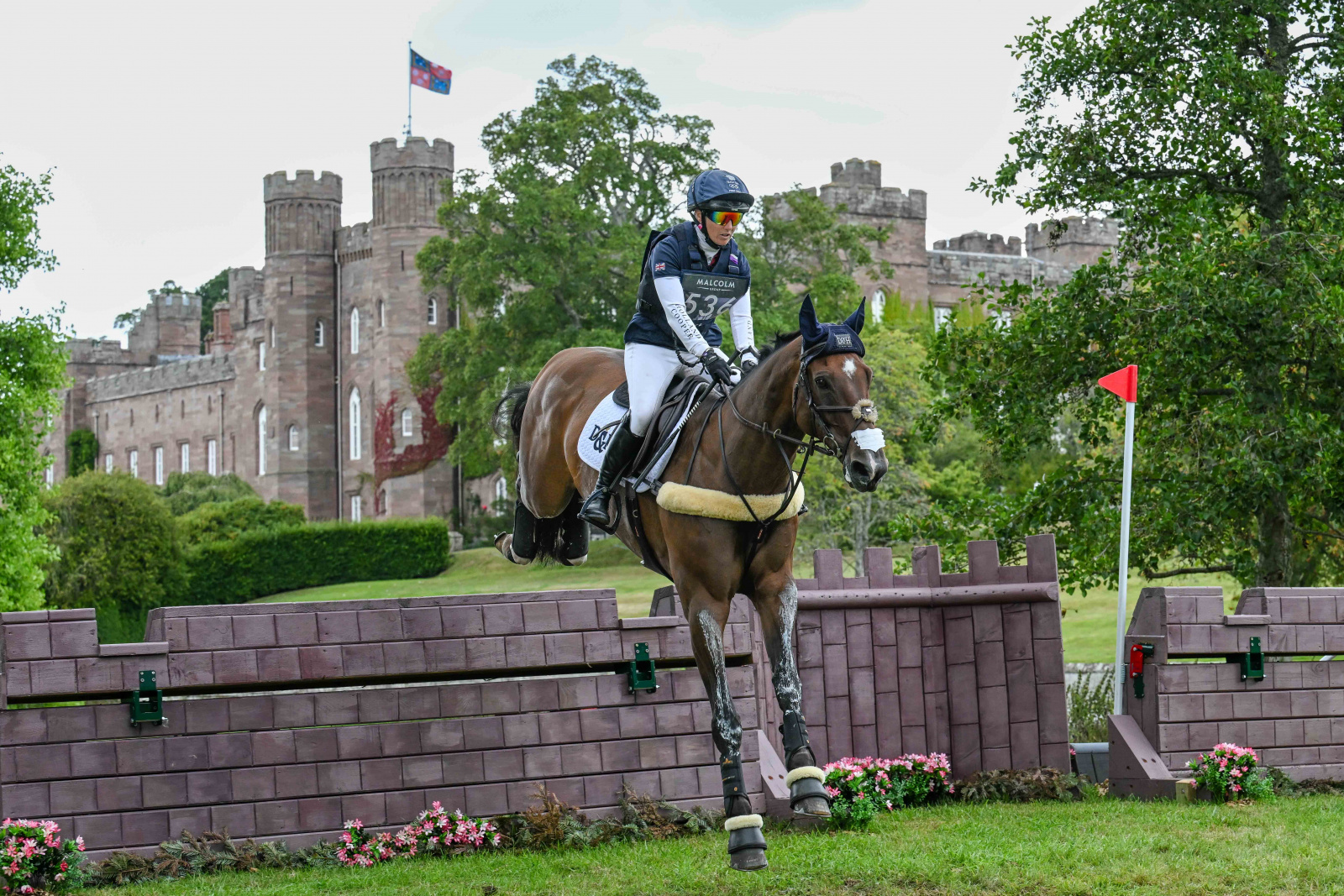
Laura Collett and London 52. Photo courtesy of Scone Palace Horse Trials.
“We know the event reasonably well and I understood the significant social and economic impact it had on the Perthshire area,” Viscount Stormont said in an interview with Invest In Perth ahead of the inaugural Scone Palace Horse Trials. “It welcomed over 40,000 visitors to the event, translating to £3 million of economic impact, including 5,000 bed nights and £1 million in food and drink alone. It would have been a major loss for the area.”
“When we coupled this large-scale event experience with our recent acquisition of Perth Racecourse, we became the obvious contender to keep the event in Perthshire,” the Viscount continued. “Not only does the Racecourse team deliver on 13 high calibre equestrian events each year, but we were also in a position to offer a purpose-built equestrian infrastructure, knowledge of grounds, and a deep understanding of horse and rider welfare. We did our research, strategised the business case, and by July 2024 we were confident that we could take it on.”
The Scone Estates team also called in the experts, filling in the gaps of the eventing knowledge they lacked. One such pickup was Alec Lochore, who’d been the Event Director at Blair Castle for over a decade. He also came in as the course designer for the top levels (James Willis designs the Pony CCI2*/CCI1* and below). Other eventing subject matter experts brought onto the team included industry press specialist Catherine Austen, Sport Manager Tanya Adamson, and Executive Assistant Maddie Pullen.
Alec, who will be the cross country course designer for the 2028 Olympics in Los Angeles, California, is one party member who left 2025’s debut at Scone Palace feeling overwhelmingly optimistic about the future. The key, Alec says, is to focus on the long view. Yes, any event will experience its own peaks and valleys as it establishes itself, but even just one year in, Alec and the team at Scone Palace feel they’ve already gotten much of their planning validated. Four years, Alec notes, is about the time one can anticipate for an event to reach “full maturity”.
“Even after year one, we were at least 75% of the way there, and if we get another 10% this year, that’s good,” Alec told me. “We’ve changed a few bits and pieces, but the core of the event remains the same — the course, the layout, the trade fair, and so on.”
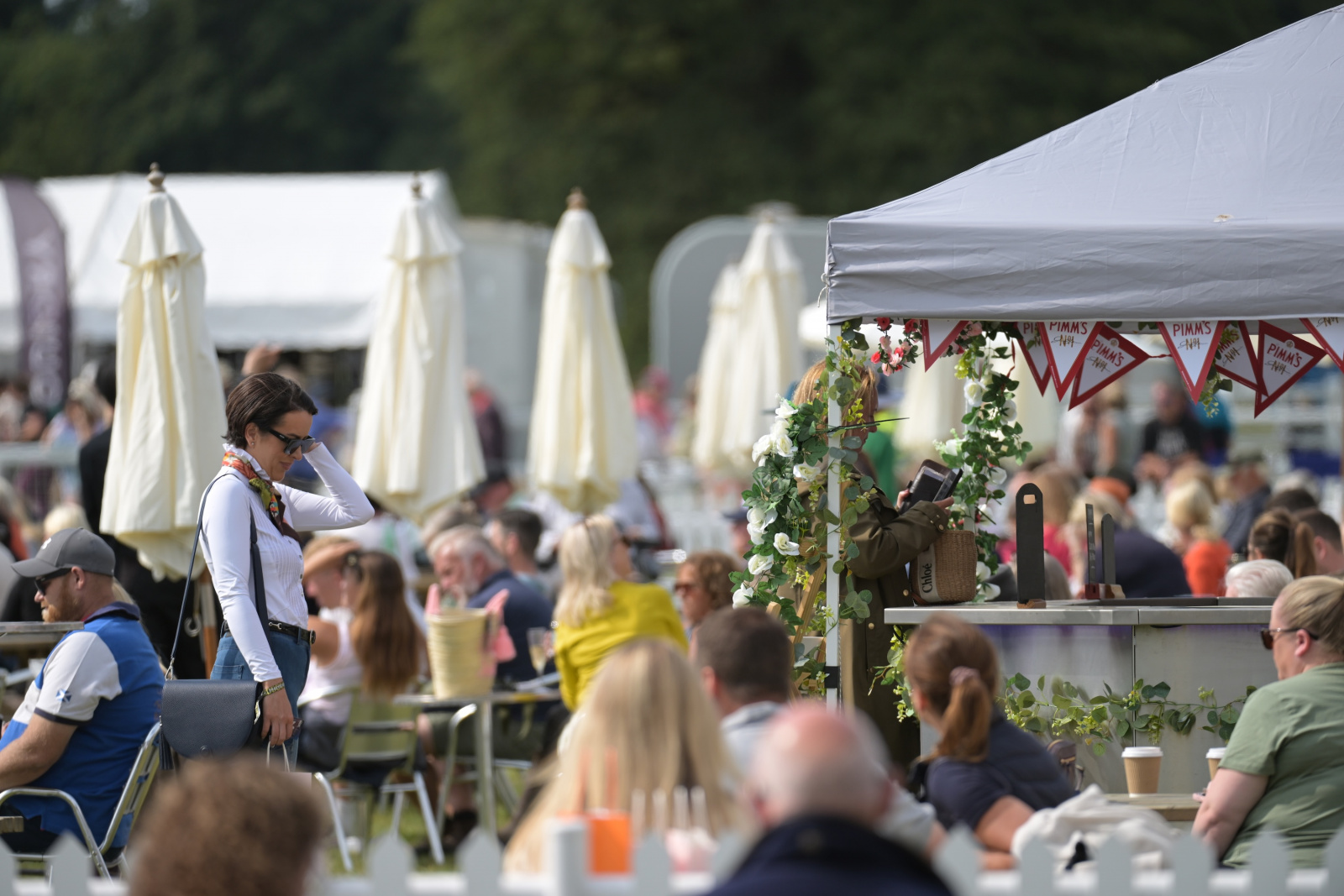
Scone Palace is carving out its own identity as a community festival. Photo courtesy of Scone Palace.
To be frank, the changes and tinkering Alec speaks of aren’t really related to the cross country itself. Scone Palace (and its predecessor at Blair Castle) plays host to thousands of horses and their handlers over the course of competition week. In addition to the eventing competitors, the event also hosts a British Showjumping competition, Grassroots eventing and even an Arena Eventing class. If that wasn’t enough to whet the palate, there’s also a Hunter Show, a Native Breed Show, Pony Club Games and a Retraining of Racehorses demonstration. Evening entertainment also features on the timetable, making it a true destination event for tourists, spectators and horse people alike.
It’s also a lot of logistical management to ensure all attendees have an experience good enough to put Scone Palace on the calendar for years to come.
“Screens, food, and loos are really what control how spectators react – pretty simple, really,” Alec laughs. He’s well-versed in the logistics of event operations as the founder of Musketeer Event Management, which organizes multiple events around the UK each season. “We’ve played around with that to try to make it better. I’ve played around with the course — a few different routes, because after I designed last year’s track, we changed some of the flows, where certain things were positioned, and it was too late to affect change for my course. Some areas got very congested, so we’ve tried to reroute, and reposition big screens, food and beverage, and loos.”
Here, the aforementioned pressure plays a role: Scone Palace had big shoes to fill. “We wanted to reflect on the 30-plus years of amazing history that Blair contributed, and also to provide something worthy for everyone who had supported Blair and wanted to come and support Scone in its early years,” Alec expressed. “That’s the pressure I felt — I wanted the people who had been so loyal to Blair to transfer that loyalty, and want to come back for Scone’s second year.”
“If we don’t have all of those different stakeholders — the riders, the horses, the owners — we don’t have anything for the public to come and see,” he continued. “So we felt pressure not to just deliver what I’d call a ‘bog-standard start-up’ first-year event. We felt the pressure to deliver more than that, and I think the team succeeded. Scone invested heavily. The racecourse team really stepped up — the one thing they understand is ground and going, and we have great irrigation capability and machinery. But it’s different managing ground on a mile-and-a-quarter oval versus a cross country course.”
Alec says the team’s goal is to continue increasing the number of competitors as well as attendees patronizing the event over time. The quality of competition fields Scone Palace attracted in 2025 was evidence of these efforts – Jonelle Price (NZL) won the inaugural CCI4*-L, and reigning European Champion Laura Collett (GBR) as well as multi-time CCI5* winner Ros Canter also collected victories last year.
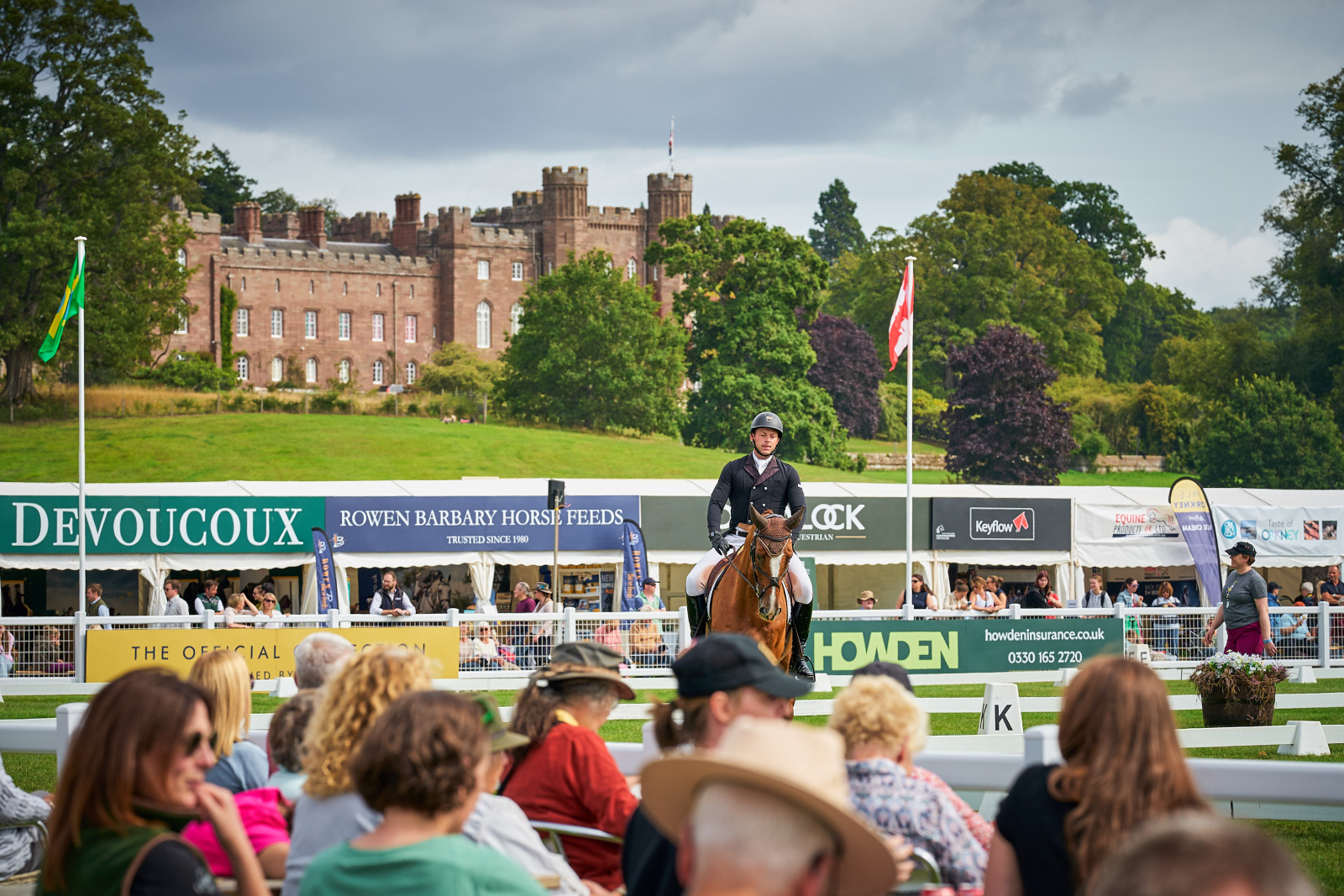
Photo courtesy of Scone Palace Horse Trials.
“I’d love to keep attracting that calibre of athlete and horse — that’s not shabby at all,” Alec said. “When you attract that level, you attract spectators, and you have a chance to grow. Then the quality of trade stands goes up too…it’s self-perpetuating.”
Sustainability and economic viability remain at the top of the pillar of importance, for Scone Palace and for every other counterpart around the world. Alec, and the rest of the brain trust behind this young but growing event, feels positive.
“At some stage, it could be a venue worthy of hosting a championship — a Young Rider championship, or more — it could develop into that,” he reflected. “And I want it to be financially sustainable. The estate has invested in our sport, and they’re not eventing people themselves. They decided they wanted to retain something like what Scotland had at Blair, so they stepped up to fill those shoes — and that’s a big thing to do. I want it to be financially sustainable for them.”
Scone Palace hosts a FEI levels from CCI1* through CCI4*-L. Scone Palace is also hosting the Scottish Grassroots Eventing Festival, comprising the Subaru Scottish Grassroots Championships at BE100 and BE90 level, and “open” British eventing BE100 and BE90 classes, also supported by Subaru. Scone Palace will take place August 27-30. More information and spectator tickets + experiences can be found at sconehorsetrials.com.