

“Building a safer future for our sport” has taken on a new literal meaning earlier this month, as a team of UK course builders lead an FEI Frangible Seminar in Victoria, Australia.
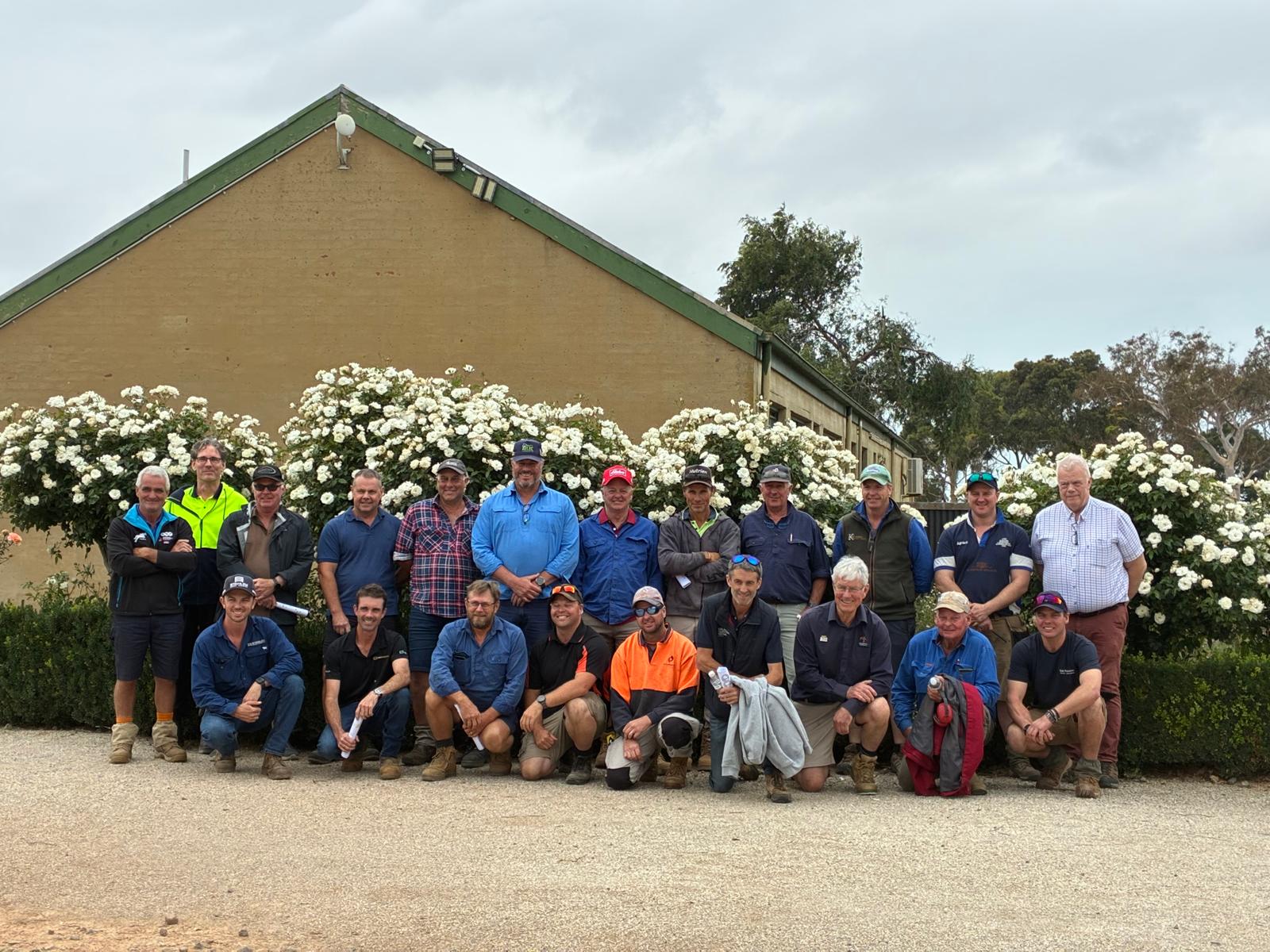
Lead by BEDE Events Stuart Buntine, and supported by Will Seely and Chris Eaton, the UK team have worked with 16 fellow course builders and designers from across Australia and New Zealand to build a range of “traditional looking” frangible fences.
“The whole frangible debate is an interesting one,” said Stuart Buntine. “I think I was like most people, very sceptical when it first started. I was a traditionalist at heart. A number of incidents have occurred over the last six or eight years whereby I’ve really started to look at it and say, the future of the sport has a dependency on us to provide sport that is safe, that takes in human safety and horse welfare.”
“I think the great thing from our point of view is the FEI’s got behind supporting the expansion of the use of frangible fences. So, this is the first of a number of courses we’re going to do globally. We’re off to Germany in February. Then, we’d love to take our knowledge and share it around the world but also learn from others because everybody’s got so much to learn in this game.”
Supported by Australian National Safety Officer Roger Kane, and with financial support from Equestrian Victoria, the team of three from the UK have joined with Mats Bjornetun, the Swedish inventor of the MIMclip, and 16 course builders from across Australia and New Zealand for a 3-day working seminar. Coming together to design and build new frangible cross-country fences, designed to look like traditional cross-country fences rather than the more futuristic style fences that have become synonymous with MIMclips over the years. The constructed fences will be transported between events throughout Victoria, Australia.
“The whole thing that we’ve done back at home is to try and push the frangibles forward and get away from the space age look and go more traditional,” commented Will Seely. “If we can spread that across the world and make people happier using it, because they’re producing a more traditional looking cross-country course, then we’re doing good and pushing safety forwards. We just keep pushing the parameters to make things safer and better.”
The seminar, set to be repeated in Germany in February, has been designed to foster collaboration and discussion between builders. Sharing knowledge, skill, and experience to quite literally build a safer future for the sport of eventing.
“Our brief was stand back, let them do and then interject where possible,” added Chris Eaton. “But in actual fact, I find that we’re watching what’s going on and quizzing them as much as they’re quizzing us as to actually, is there a better way of doing that? Have you done it better? Can we educate you or can you educate us? We’ve already seen a couple of different methods, and we’ve talked through the pros and cons in different ways of doing it.”
“The important thing is we’re trying to build fences that people are used to seeing out on cross-country courses that are not frangible and we can add a safety element to that fence without changing the look of it too much. It’s the sort of fence that you know, the average roll top or log a house, all these things can be made frangible. We want to keep moving things forward, but I think a lot of people started to get an expectation that these new safety fences were going to change what cross-country was all about.”
Stuart Buntine and BEDE Events are pioneers in the development of frangible fences in the UK. Thoresby’s CCI4*-S track in 2025 was largely all frangible, with a continued push in 2026 to replicate this across all tracks. Creating a shared vision for a safer future for the sport of eventing.