
There’s a version of the horse world that gets sold as simple: ride, groom, maybe become a vet if you want a “real” profession. But in Courtney Carson’s conversation on latest episode of The Go Eventing Podcast (out now!), what emerged was something much more honest, and much more useful.
Courtney, a former top-level groom whose career included a decade with Doug Payne and a trip to the Tokyo Olympics, spoke candidly about what it means to build a life in the sport, what happens when your path changes, and why the industry needs to do a better job of showing people what’s possible beyond the most obvious roles.
For anyone trying to figure out a career in horses (or a transition out of one lane and into another, which is a path she knows intimately), her perspective offered a lot to think about.
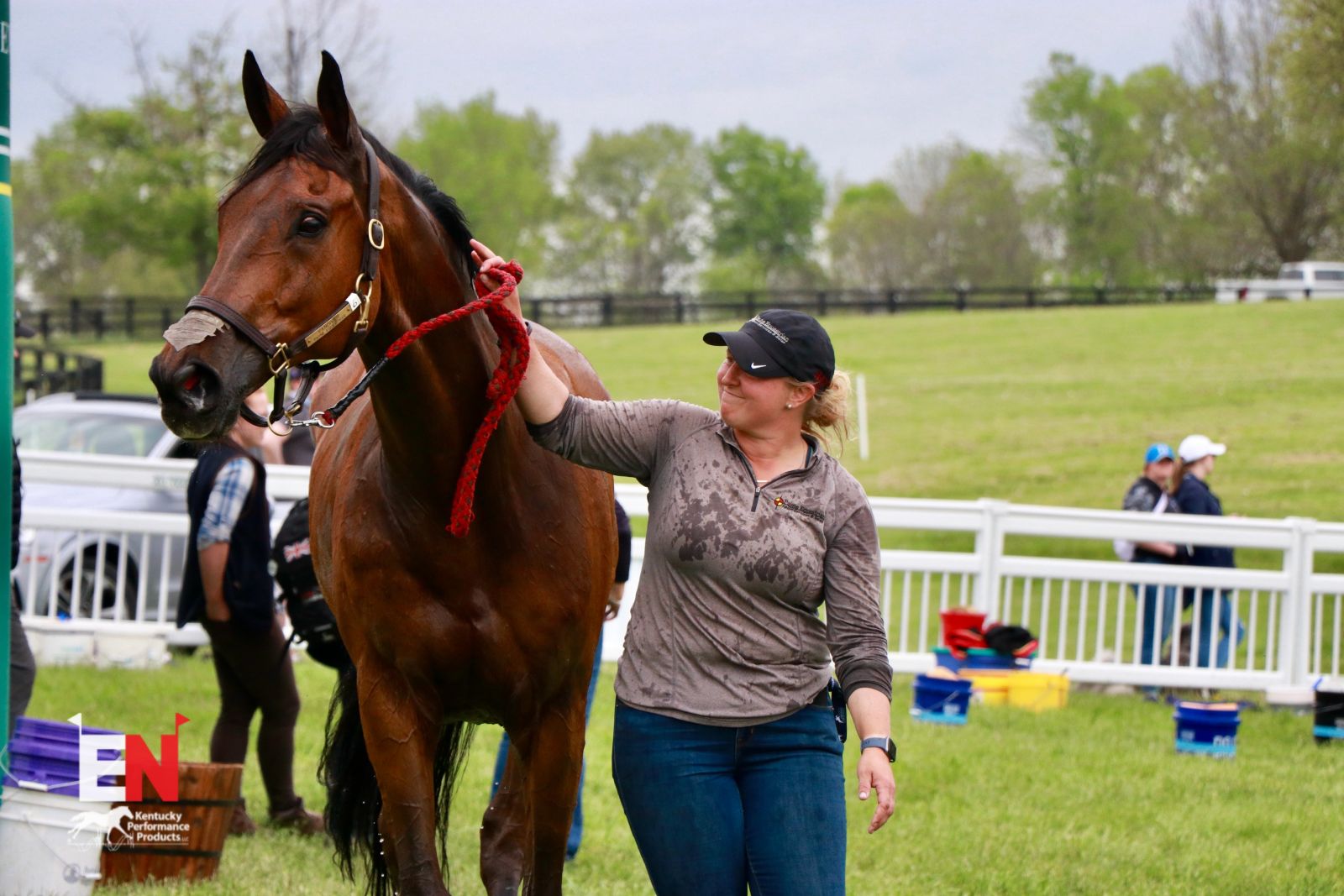
A moment with the superstar himself. Courtney Carson has cared for Vandiver for the entirety of his time with Doug Payne. Photo by Sally Spickard.
1. The horse world offers more career paths than people are often told
“I didn’t look at the industry as a whole and all of the different ways that I could have done [my career]. I thought about [law school], I thought about vet school, I thought about all of these different avenues, but nothing got me out of bed every day like going to the barn did. It never occurred to me that there would have been potentially an avenue to get into, like equine malpractice law or writing contracts for sales and leases, or I could have done real estate and specialized in farms and equestrian properties. I just feel like there’s so much to our sport and our community, and we just see it as these three little things. It’s like be a rider, be a groom, be a vet, and you’ve got nothing else past that.”
One of Courtney’s strongest points was that the industry is often framed far too narrowly. Young people coming up in the sport are frequently shown only a few obvious career options, when in reality there are opportunities in law, real estate, officiating, education, media, course design, bodywork, administration, to name just a few. It’s become her goal to create a resource for people seeking out opportunities and information on how to take advantage of them (more on that later).
2. Passion and ambition should be paired with preparation
“I just think like if I had taken those little nuggets of information and invested in myself a little bit differently at 18 to 22, I still could have done what I did, but then I would have had a stronger foundation to have fallen back on when I chose to get out.”
Courtney is clear that she does not regret the path she took. But she also recognizes that loving horses and going all-in on the sport does not mean you should stop building a foundation for the future. Her advice, in essence is: chase the dream, but don’t leave yourself with nowhere to land when life inevitably tosses you curveballs — or when the dreams have been turned into reality!
3. Loving the work doesn’t always mean it will sustain the life you want

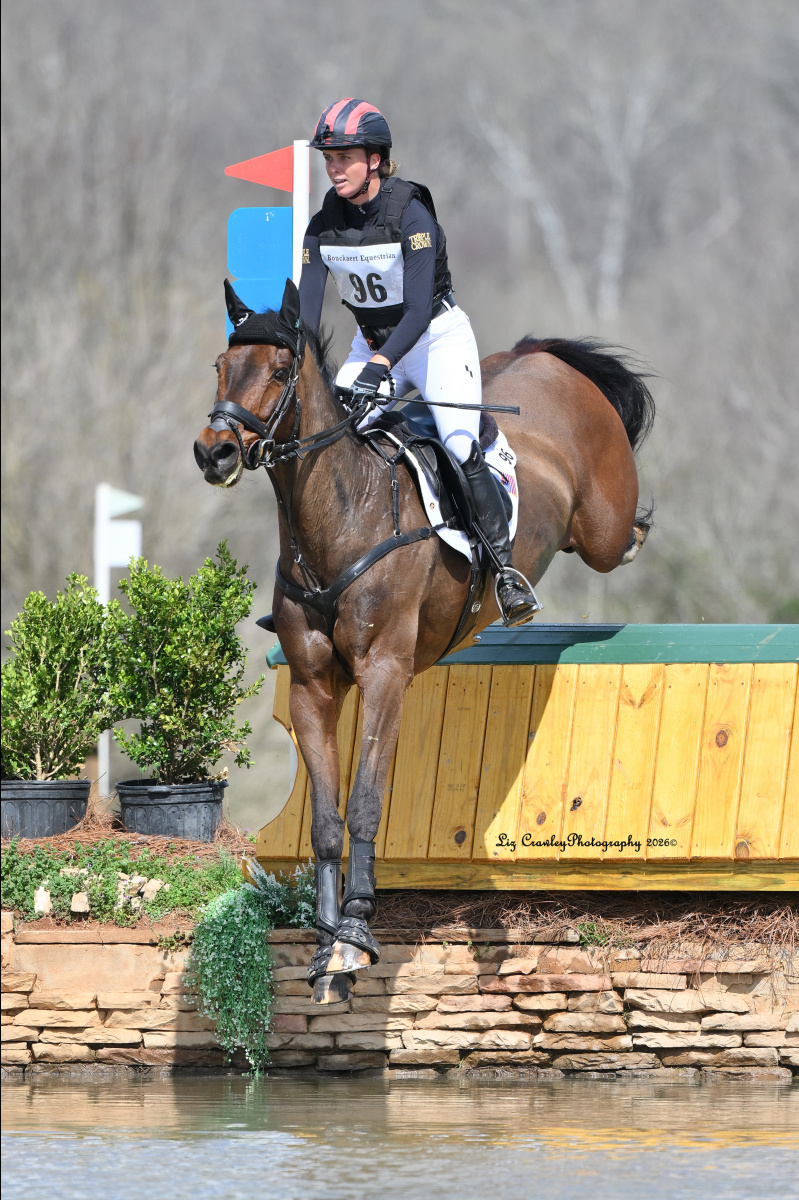
Bird is the Word and Courtney Carson. Photo by Shannon Brinkman.
“As great as that was, I just don’t think for the next 30 years of my life that has really set me up for success that way.”
This is where Courtney’s perspective feels especially valuable. She doesn’t argue that meaning and enjoyment were a large part of her job, but she simply asks a harder question: can this path support the rest of your life, too? For many people in horses, that’s the question that comes later than it should.
4. There is wisdom in leaving before you’re forced to
“I was trying to be strategic. I would have loved to have stayed for five more years or whatever, but trying to build the rest of my future as well. I was like, I’m 31. If I get out now, I can still build another career, versus I wait 10 more years, and now I’m working until I’m 80 just to pay my bills.”
Rather than framing her transition as “walking away”, Courtney describes leaving grooming as a strategic decision. That’s an important distinction. In a sport where grit and loyalty are prized, there can be pressure to stay in a role long past the point where it still serves you. Courtney’s view is that timing matters, and sometimes the smartest move is the one that gives your future more room.
5. Even the right transition can feel disorienting
“It was a huge transition. I was like, What do I do with myself? What do I do with my life? It’s been a good refocus, but it’s also been very, very weird.”
There’s no sugarcoating in the way Courtney talks about change, and that honesty is part of what makes her comments resonate. A career shift can be necessary and healthy and still feel strange, grief-filled, and destabilizing. Leaving a job in horses (and, as we mentioned, not knowing what other paths may exist) often also means leaving routine, identity, community, and purpose as you knew them.
6. Workers need to understand the full value of a job, not just the paycheck
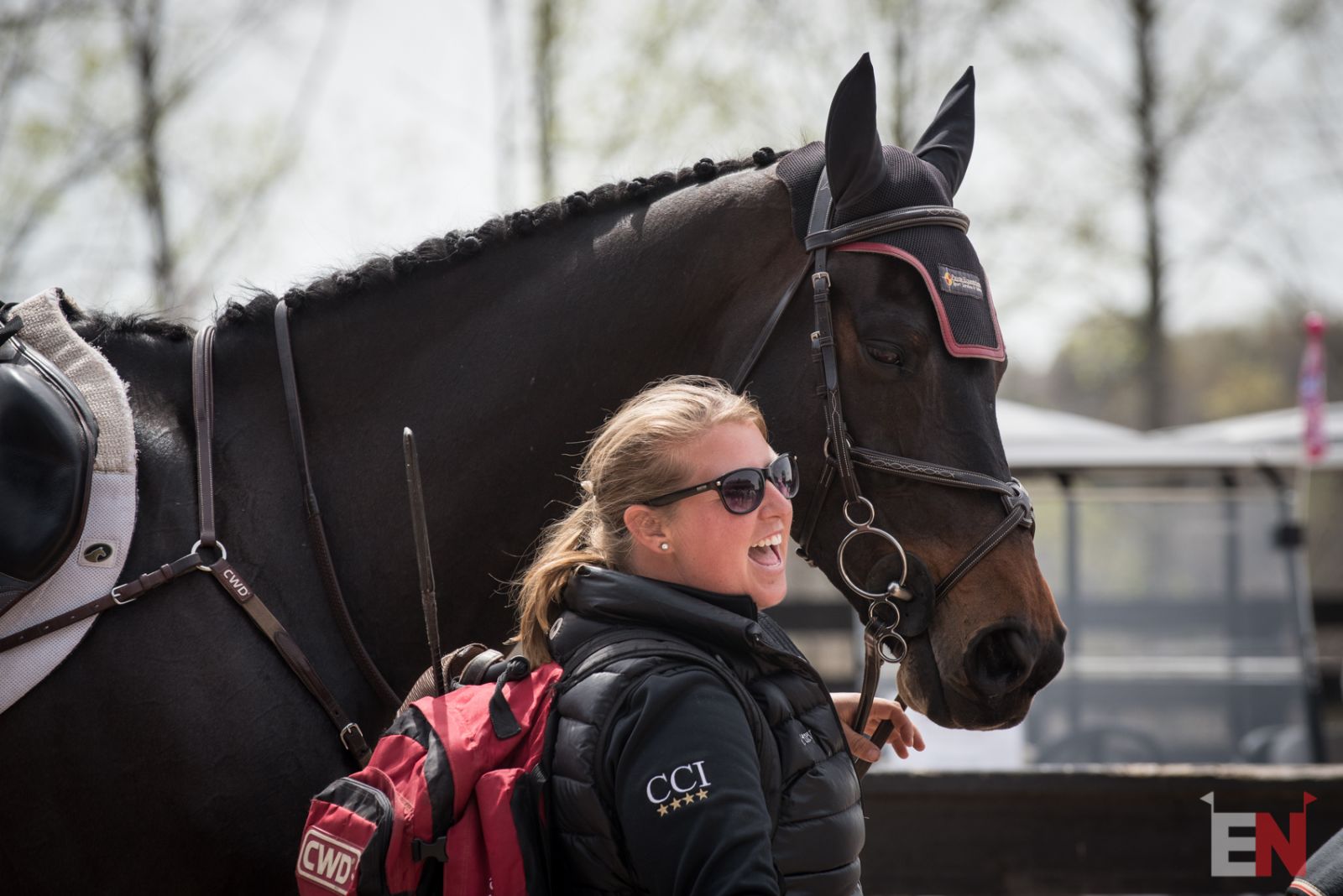
Courtney Carson and Getaway. Photo by Leslie Threlkeld.
“Understand what your total compensation is when you’re interviewing for a job. Because I think we read all of these ads online, and it’s like, you know, ‘salary based on experience, housing provided, stall provided’. I want to know what the number is on that. What am I making per year? And then what are you taking out of my paycheck, for my housing and for my horse?”
This was one of Courtney’s most practical points. Compensation in the horse industry is often presented vaguely, with housing, stalls, utilities, or horse care rolled in without much clarity. Her advice is simple but powerful: know the real number, know what is being provided, and know what that package is actually worth. This allows potential employees to find the option that works best for them, setting them up for a more long-term relationship.
7. Negotiation is not rude — it’s necessary
“A lot of that comes with research. It’s with knowing what the cost of living is for those types of accommodations in your area are. And that is something that — not that you want to be rude about it — but you need to stand your ground and say, ‘look, a one bedroom apartment in this part of the country is $750 a month, so that’s what you need to factor into my salary to do this.’”
Courtney pushes back on the idea that horse industry workers should just be grateful for the opportunity and take what they are given. Research matters. Asking questions matters. Understanding cost of living, health insurance, and the real value of benefits matters. The horse world may run on passion, but careers still require business sense.
8. The industry needs a better map for what comes next
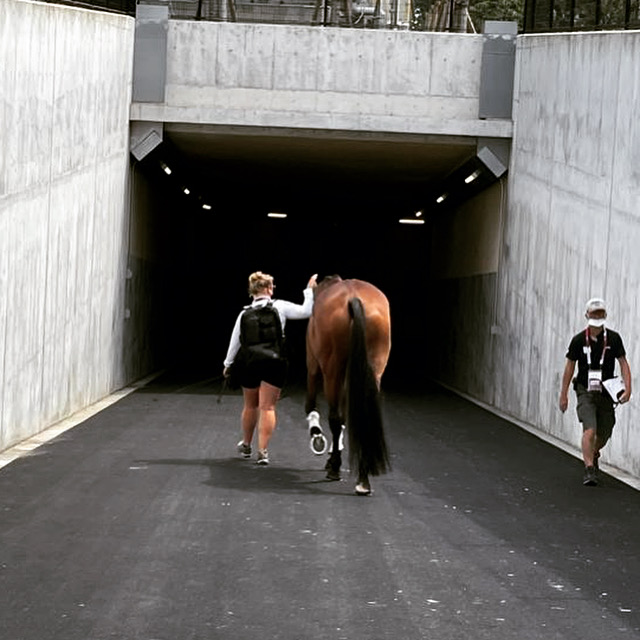
Photo courtesy of Courtney Carson.
“One thing that I really want to build out is I want to kind of take that advice that I ignored from my parents, and I would love to build it out into a career map for people, because there are so many jobs available in this industry that how do we get more people doing that? Like, yes, we need grooms and we need working students. Don’t get me wrong. But what do you do next?”
For many people, the hardest question is simply, “where do I start?” Courtney puts a finger on a major gap in the industry: there are not enough visible pathways for people trying to move from one phase of their horse career into another. That leaves too many smart, experienced people trying to reinvent the wheel on their own.
9. Career information in the sport should not be hard to find
“In all of this research that I’m doing and trying to figure out what certifications I need and what training courses I need to take, I’m like ‘this information is impossible to find.’ Why don’t we have a database of this somewhere? Why don’t we have it very clearly spelled out the requirements of what you need if you want to be a steward, or you want to be a judge, or you want to be a TD, or you want to be a course designer, and what kind of money can you make doing this, too?”
This line gets at more than just a personal frustration. Courtney points out that basic information (what certifications require, how to become an official, what different roles pay, how long they take to develop), which while mostly available online is often scattered, opaque, or inaccessible. That makes long-term planning much harder than it needs to be.
10. A career in horses should not require unsustainable sacrifice forever — and there should be healthy ways of working in the industry and the grind it does require
“There is also a way to make it a career that you’re not killing yourself and eating ramen every night to still enjoy it. It is definitely a career of passion. But there is also a way, though, to make it a career that you’re not killing yourself and eating ramen every night to still enjoy it…I enjoy a nice drink at the end of the evening, probably as much as just about anybody else. But I also would really like to see that the language changes from how do we survive this? And it’s, ‘oh, we get drunk at the end of the night’, to ‘we have these ways for you to be healthy and handle this.’ It is such a mentally taxing sport and career and lifestyle.”
This may be the line that best sums up Courtney’s entire outlook. She is not arguing against hard work, or against passion, or even against sacrifice. She is arguing for a version of the sport that is more sustainable, more transparent, and more livable for the people who keep it running.
These are just snippets of Courtney’s great interview on The Go Eventing Podcast, available now on your favorite podcast platform or here on our main host page.
This episode of The Go Eventing Podcast is presented by the Maryland Horse Park System. For incredible horse experiences, look no further than The Maryland Horse Park System. With one-of-a-kind destinations across the state, the Maryland Horse Park System is your gateway to connect with horses your way—whether you’re a fan or an equestrian, a beginner or a pro. From World Cup Show Jumping and iconic racing to international eventing, scenic trail riding and hands-on education, it’s all here and waiting for you. Find locations and event schedules here.